We're changing the way Sapphire looks
Same platform, new visual identity. Learn more: Sapphire is becoming NHMRC Grant Management System.
We're changing the way Sapphire looks
Same platform, new visual identity. Learn more: Sapphire is becoming NHMRC Grant Management System.
Search our resources on this page including case studies, fact sheets, guidance, policies, and video.
For annual reports and corporate plans, guidelines, reports, statements and 10 of the Best see our Publications.
If you are unable to find what you are looking for, you can search for archived resources on the National Library's Australian Government Web Archive (Trove).

Iodine is an essential nutrient required for normal brain development and growth. NHMRC-funded researchers established that iodine deficiency during pregnancy causes irreversible brain damage in children and demonstrated that this damage can be prevented through supplementation. Their work underpinned global public health measures, contributing to the large-scale reduction of iodine deficiency disorders in many countries and protecting millions of children from preventable intellectual disability.

The Emissions Reduction Plan details the actions NHMRC will take to reduce our operational emissions and contribute to achievement of the APS Net Zero 2030 Target. The plan is aligned to the Australian Government’s Net Zero in Government Operations Strategy.
The plan will be reviewed and updated annually from 2027, with each update to include reporting on the progress of our actions.

Worldwide, paracetamol is one of the most widely used of all drugs and is the standard analgesic used to remedy mild to moderate pain. At the same time, paracetamol is one of very few over-the-counter (OTC) drugs that can lead to death at overdose if untreated. With a surge in paracetamol overdoses and related liver injuries occurring in Australia, stronger preventative measures were needed. NHMRC-funded researchers undertook a series of studies leading to new clinical interventions, updates to clinical guidelines and nationwide policy changes on how paracetamol is sold.
Disturbances in body chemistry commonly develop during many forms of illness and following surgery. If left untreated they can lead to death. NHMRC-funded researchers at the University of Melbourne and The Florey Institute made major contributions to understanding how the body regulates its electrolytes and water balance and to introducing practical methods for measuring and managing these processes in patients. This work laid the foundations of modern intensive care and also underpinned the development of widely used medicines for hypertension, heart and kidney disease, improving health outcomes in Australia and internationally.

The Investigator Grants peer reviewer 2027 training webinar is available to assist with the peer review process.
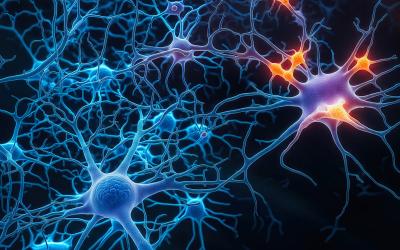
Neurotransmitters are small molecules that enable communication from nerve cells to other cells, including muscle, glands and other neurons throughout the body. They are essential for processes such as movement, cognition, digestion and cardiovascular control. NHMRC‑funded researchers discovered an entirely new type of neurotransmitter, leading to the development of a new area of research. Their work has contributed to the development of new drugs that can prevent heart attacks and stroke, treat chronic cough and relieve dry eye disease.
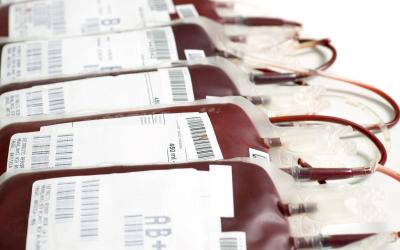
Commencing in the late 1990s, concerns about variant Creutzfeldt–Jakob disease (vCJD) led Australia to restrict blood donation from people who had lived in the United Kingdom (UK) during the bovine spongiform encephalopathy (BSE) outbreak. While protecting the blood supply, these measures also excluded many potential donors. NHMRC-supported researchers at the Kirby Institute, working with Australian Red Cross Lifeblood, applied epidemiological evidence and risk modelling to reassess the ongoing threat of vCJD transmission. Their research showed that removing the long standing UK residency deferral posed an extremely low risk. This evidence informed regulatory change, safely expanding the donor pool and strengthening the resilience of Australia’s blood supply.

To assist researchers considering self-nominating for peer review, guidance for considering which funding scheme is most appropriate for self-nomination is provided on this page.

Recorded on Tuesday, 14 July 2026 1pm – 3pm (AEST).

National Health and Medical Research Council (NHMRC) is committed to implementing the National Principles for Child Safe Organisations and the Commonwealth Child Safe Framework.

Cyber security incidents are events that compromise the confidentiality, integrity, or availability of information and systems, including threats such as malware, phishing, unauthorised access, and data breaches. All agencies are responsible for identifying, assessing, and promptly reporting these cyber security incidents to NHMRC while continuing to manage them within their own environments.

NHMRC is serious about preventing, detecting and responding to fraud and corruption and is committed to high ethical, moral and legal standards.
A key focus of this framework is to raise awareness of fraud and corruption among NHMRC employees and other people who deal with NHMRC, and to assist in the prevention, detection and reporting of suspected fraud and corrupt conduct.
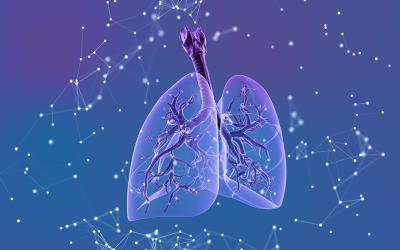
This case study illustrates a digital health research translation pathway, from discovery through development, commercialisation and global rollout of a digital lung imaging analysis software.

This case study demonstrates a public health and health system-level research translation pathway, from early policy development through implementation and health system scale‑up of publicly funded bariatric surgery in Queensland.
This case study demonstrates a public health and health system-level research translation pathway, from discovery through implementation and delivery of an omega-3 test and treatment program to help prevent preterm birth.

This case study illustrates a prophylactic (preventive) therapeutic research translation pathway, from discovery through development, commercialisation and global implementation of the HPV vaccine.

This case study demonstrates a public health and health system-level research translation pathway from early development and testing through implementation and scale‑up of a school physical activity intervention.

This section explores what research translation is, including knowledge translation and the relationship between research translation and commercialisation, and how these contribute to improving health outcomes and delivering impact from research.
NHMRC plays a vital role in advancing health and medical research translation in Australia, supporting the uptake of research findings into public policy, health systems and clinical practice, while enabling the commercialisation of research discoveries within and beyond the health system.
The NHMRC Research Translation Strategy 2026–2030 outlines a focused approach to strengthening Australia’s capacity to translate health and medical research into improved health outcomes, stronger public policy, and a thriving knowledge economy. It reflects NHMRC’s leadership role in enabling research translation through targeted funding, capability building, and system-wide collaboration. The complete Strategy is available on the publication web page.
Research translation can take many forms. This section outlines common pathways to impact and how research can be translated into better health outcomes through both commercial and non-commercial approaches.
This section details enablers of successful research translation across the health and medical research system and how effective research translation requires collaboration across a diverse network of stakeholders.

Over the counter (OTC) analgesics are some of the most commonly used medicines worldwide and play a key role in everyday pain and fever management. However, overuse of such medicines can cause ill health or even death. NHMRC funded researchers have played key roles in developing knowledge about these adverse health impacts and have also influenced public policy to reduce their likelihood. Hospital clinicians and researchers based at major Australian universities undertook clinical, pathological and epidemiological studies to establish a clear causal link between compound analgesic overuse and serious kidney disease, leading to regulatory action by Australian governments.
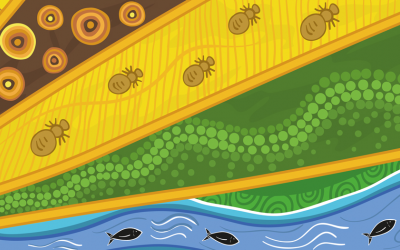
To help drive equitable health outcomes for Aboriginal and Torres Strait Islander communities, all researchers should consider the potential benefits of their research for Indigenous health.

NHMRC and CHF are promoting excellence in consumer and community involvement through case studies. Each case study was developed in collaboration with the individuals or organisations mentioned.
An annotated bibliography that provides links to guidance material that can help everyone embed consumer and community involvement (involvement) in research. It is intended to be read alongside the Statement on Consumer and Community Involvement in Health and Medical Research (the Statement). The material in this document is only some of the guidance material available. The resources will be checked regularly for currency and updated as required.
The videos below feature consumers, researchers, and the CEOs of NHMRC and CHF discussing the benefits of effective consumer and community involvement in health and medical research. All individuals featured in the videos were involved in the development of the Statement on Consumer and Community Involvement in Health and Medical Research.

The use of generative artificial intelligence (GenAI) may present a number of opportunities and challenges for grant applicants and peer reviewers. The purpose of this document is to outline NHMRC’s policy (the Policy) on the use of GenAI.

The purpose of these procedures is to promote the integrity and accountability of the National Health and Medical Research Council (NHMRC).

NHMRC-supported research at St Vincent’s Institute of Medical Research (SVI) has led to the development of bone cell biology as a field, defining the key bone cell types, their regulation, and interactions. This foundational work has had significant positive effects upon clinical practice, particularly in the treatment of osteoporosis, hypercalcaemia of malignancy, and osteogenic sarcoma. The research has contributed to the development of widely used therapeutics such as denosumab and has influenced global clinical practice.

The Direct Research Cost (DRC) Guidelines set out the general principles that researchers, Research Administration Officers and Finance Officers should use to guide the appropriate allocation of NHMRC funds for salaries and stipends, and to determine whether expenses are DRCs for the NHMRC funded Research Activity.
Effective 1 January 2026.
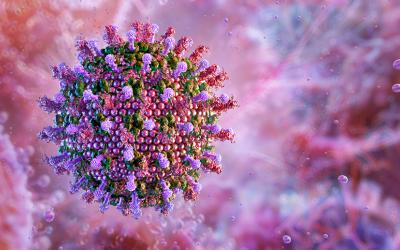
Worldwide, pneumonia is a leading cause of childhood death. About one-third of these deaths could be prevented by using the pneumococcal conjugate vaccine (PCV). Most of these deaths occur in low- and middle-income countries (LMICs) that have not made full use of PCV, both because of its high cost and uncertainty about impact. Researchers at the University of Melbourne (UoM) and Murdoch Children’s Research Institute (MCRI) and their international partners have taken major steps towards making PCV more accessible globally.

The NHMRC Grant Variations Policy details our policy on varying a grant. It includes how to submit a grantee variation request. Types of variations are also listed.
Effective 1 January 2026.

The purpose of the Vulnerability Disclosure Program is to receive, assess and remediate cyber vulnerabilities.

The Guide for assessing research involving Artificial Intelligence, Machine Learning and Large Language Model Technology (collectively “AI”) has been developed by the Australian Health Ethics Committee for use by researchers and ethics review bodies when developing and assessing proposals for research involving AI.

Skin sores and infections are worldwide problems but are particularly important health issues for remote-living Aboriginal and Torres Strait Islander communities in Australia. Rates of skin disease have been high in such communities for decades: not just by Australian urban standards but by world standards. With one study finding impetigo prevalence as high as 70%,1 these problems are so prevalent that they have come to be considered ‘normal’ – by children, their families and even by health care providers. NHMRC-funded researchers at the Menzies School for Health Research (Menzies) and The Kids Research Institute have made major contributions to improving skin health in these communities.

This plan identifies the workforce capability required by NHMRC to meet its objectives, now and into the future.

The Central Australia Academic Health Science Network is an NHMRC-accredited Research Translation Centre. We collaborate to deliver research-informed healthcare and training. The below case studies highlight our work in translating research into better health outcomes and building capability across the system.

Health Translation Queensland is an NHMRC-accredited Research Translation Centre. We collaborate to deliver research-informed healthcare and training. The below case studies highlight our work in translating research into better health outcomes and building capability across the system.

The Health Translation South Australia is an NHMRC-accredited Research Translation Centre. We collaborate to deliver research-informed healthcare and training. The below case studies highlight our work in translating research into better health outcomes and building capability across the system.

The Maridulu Budyari Gumal, the Sydney Partnership for Health, Education, Research and Enterprise (SPHERE) is an NHMRC-accredited Research Translation Centre. We collaborate to deliver research-informed healthcare and training. The below case studies highlight our work in translating research into better health outcomes and building capability across the system.

The Melbourne Academic Centre for Health is an NHMRC-accredited Research Translation Centre. We collaborate to deliver research-informed healthcare and training. The below case studies highlight our work in translating research into better health outcomes and building capability across the system.

Monash Partners is an NHMRC-accredited Research Translation Centre. We collaborate to deliver research-informed healthcare and training. The below case studies highlight our work in translating research into better health outcomes and building capability across the system.

The NSW Regional Health Partners is an NHMRC-accredited Research Translation Centre. We collaborate to deliver research-informed healthcare and training. The below case studies highlight our work in translating research into better health outcomes and building capability across the system.

Sydney Health Partners is an NHMRC-accredited Research Translation Centre. We collaborate to deliver research-informed healthcare and training. The below case studies highlight our work in translating research into better health outcomes and building capability across the system.

Top End Aboriginal Health Research Alliance is an NHMRC-accredited Research Translation Centre. We collaborate to deliver research-informed healthcare and training. The below case studies highlight our work in translating research into better health outcomes and building capability across the system.

The Tropical Australian Academic Health Centre is an NHMRC-accredited Research Translation Centre. We collaborate to deliver research-informed healthcare and training. The below case studies highlight our work in translating research into better health outcomes and building capability across the system.

Western Australian Health Translation Network is an NHMRC-accredited Research Translation Centre. We collaborate to deliver research-informed healthcare and training. The below case studies highlight our work in translating research into better health outcomes and building capability across the system.

Contact lenses provide improved vision for many people around the world, however when they were initially developed they could also impair eye health. The work of NHMRC-funded researchers at the University of New South Wales (UNSW) led to significant positive impacts on eye care globally. These included the development of a much safer type of contact lens along with several other market-leading products, and advancing knowledge about contact lens-related infection and inflammation.

The growth of the international scientific enterprise has led to the creation of enormous amounts of new health and medical knowledge that has positively transformed health care. However, during the mid-1900s, managing and gaining access to this knowledge was becoming increasingly difficult for both researchers and clinicians. To address this challenge, NHMRC was instrumental in introducing to Australia a system called MEDLARS. This system – now known as MEDLINE/PubMed – has become essential for biomedical and health researchers and clinicians worldwide.