Worldwide, paracetamol is one of the most widely used of all drugs and is the standard analgesic used to remedy mild to moderate pain. At the same time, paracetamol is one of very few over-the-counter (OTC) drugs that can lead to death at overdose if untreated. With a surge in paracetamol overdoses and related liver injuries occurring in Australia, stronger preventative measures were needed. NHMRC-funded researchers undertook a series of studies leading to new clinical interventions, updates to clinical guidelines and nationwide policy changes on how paracetamol is sold.
Origin
During the 1950s, paracetamol became available in the United Kingdom and Australia under the trade name Panadol. Panadol was originally available only by prescription, for the relief of pain and fever, and was advertised as being ‘gentle to the stomach’ since other analgesic agents of the time contained aspirin, a known stomach irritant.
Since that time, paracetamol has become the most widely used drug in the world. Most people can take paracetamol without experiencing troublesome side-effects so it is routinely used for pain and fever reduction in children, pregnant women, the elderly and those with non-inflammatory musculoskeletal conditions. Paracetamol is of particular value in the treatment of patients in whom nonsteroidal anti-inflammatory drugs (such as aspirin and ibuprofen) are contraindicated.
When used as directed paracetamol is safe and effective, however by the late 1960s it was well-documented that paracetamol overdose causes acute liver failure.1 During the early 1970s, trials began of an antidote, N-acetylcysteine or NAC, which acts by replenishing the body's stores of glutathione, a molecule that detoxifies a harmful chemical compound produced when paracetamol is broken down by the liver. NAC dramatically improves survival when given promptly but, despite this innovation, preventing harm from paracetamol overdose remained challenging.
Over time, large pack sizes of paracetamol had been allowed to be purchased freely in Australia – up to 20 tablets from supermarkets and 100 tablets from pharmacies, with no legal limit on the number of packs in one purchase. This meant that large quantities might be easily accessible at home and available to use impulsively.
Investment
NHMRC‑funded researchers who contributed to knowledge and impact relating to the prevention and management of paracetamol overdose include: Nicholas Buckley, Angela Chiew, Geoffrey Isbister, Anselm Wong, Rose Cairns, Andrew Dawson, Donald Birkett, John Miners, Helen Christensen and Alison Calear.
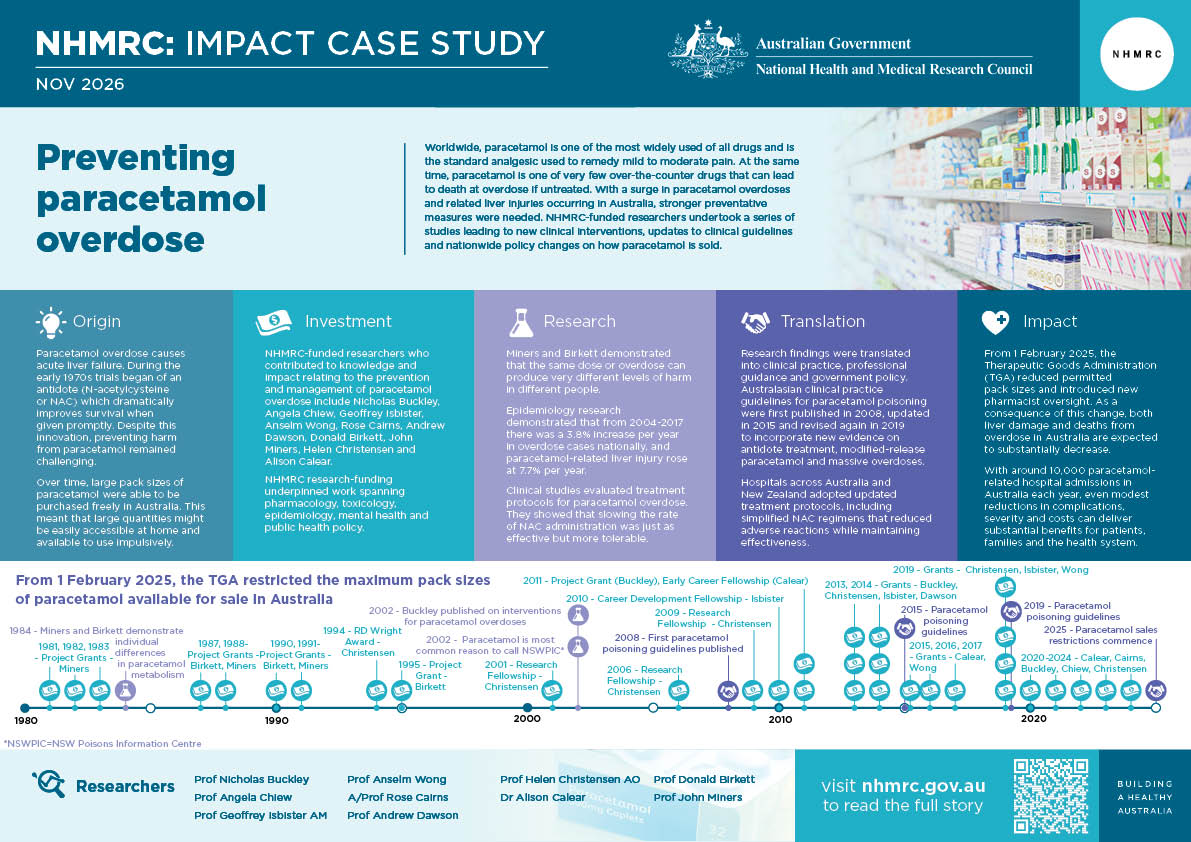
The PDF poster version of this case study includes a graphical timeline showing NHMRC grants provided and other events described in the case study.
Research
The phenomenon of liver damage arising from paracetamol overuse was first noted in NHMRC’s Council Session records in 1976 and from that time onwards, NHMRC‑funded researchers investigated the causes, mechanisms, clinical management and prevention of harm associated with overuse.
Pharmacology and metabolism
Commencing at Flinders University in South Australia in 1981, Birkett and Miners developed expertise in toxicology, pharmacology and drug metabolism relevant to paracetamol and a range of other drugs.
Their research showed that the body breaks down paracetamol in the liver using several enzyme controlled pathways and that people differ in how well these pathways work. Some individuals are more vulnerable because the activity of these enzymes, and the availability of protective molecules like glutathione, varies between people due to genetic, environmental and physiological factors such as liver function, nutritional status and exposure to drugs or alcohol. As a result, the same dose or overdose can produce very different levels of harm in different people so clinicians need to tailor overdose management—for example, timing and dosing of antidotes—to the individual patient, rather than using a single standard protocol for everyone.2,3,4
Epidemiology and burden of harm
Research involving Cairns, Dawson, Isbister, Buckley and colleagues analysed the national poisons centre records, hospital admissions and coroners' records of deaths spanning 2004–2017. They found that the annual number of paracetamol poisoning hospitalisations increased by 44% over that period (from 8 147 to 11 754 cases). This equated to a steady 3.8% increase per year in overdose cases nationally. They also found the incidence of paracetamol-related liver injury rose at 7.7% per year. These increases were well ahead of the national increase in population of 1.6% per year. During the period, over 200 deaths were attributed to paracetamol poisoning.5
The team’s research showed that people were taking larger overdoses than before: the median number of tablets taken climbed from 15 to 20. They also found that overdoses using modified release (MR) paracetamol involved higher doses than overdoses with standard paracetamol. MR tablets are higher-strength, and release the drug more slowly over time. This makes MR paracetamol overdoses both more dangerous and more difficult to treat successfully.5
Clinical toxicology and treatment optimisation
Clinical studies led by Buckley, Isbister, Chiew, Wong and colleagues evaluated treatment protocols for paracetamol overdose.
Initial work focused on reducing side-effects. The traditional NAC treatment protocol involved three successive infusions over 20-25 hours, with half the dose given over the first 15 minutes. While life-saving, this approach was onerous for patients and staff, and it often caused severe side effects like vomiting and pseudo-allergic reactions such as rashes and wheezing. Simply slowing that initial infusion to run over 60 minutes did not reduce the adverse effects significantly.6
A large multi‑centre study demonstrated that a much slower initial rate in a simplified two‑bag NAC treatment protocol was just as effective but reduced the occurrence of severe NAC side effects by 80–90%. Patients experienced significantly less nausea and vomiting as well. These results, published in 2020, provided the evidence base to change standard care. Two subsequent studies then showed that treatment could be safely stopped after 12 hours.7,8
The other focus was on improving effectiveness in those situations where acute liver failure continued to occur. Additional studies addressed management of MR paracetamol-based overdoses, massive ingestions and staggered dosing, identifying when higher doses or extended treatment were required.9,10 More recently, Chiew led studies demonstrating effectiveness of a new antidote.11
Mental health and behaviour
Follow-up using linked health data indicated that a further risk for those having an overdose is the underlying risk of further episodes of self-harm.12 Christensen and Calear, working at the Australian National University (ANU) and the University of New South Wales (UNSW), examined behavioural drivers of paracetamol overdose. Their work identified that many overdoses, particularly among young people, were impulsive rather than premeditated and often involved medicines already available in the home. Their work provided evidence for the need for preventive strategies beyond pharmacy controls, like better mental health resources and parental education.13,14,15
Translation
Not only did NHMRC-funded researchers develop valuable new knowledge, they also worked with government and clinicians to change public health policies and clinical practices.
In 2008, Buckley and colleagues published the first ‘Guidelines for the management of paracetamol poisoning in Australia and New Zealand’ in the Medical Journal of Australia.16
Buckley, Cairns, Christensen and Calear were co-authors of the Therapeutic Goods Administration (TGA) Independent Expert Report on the Risks of Intentional Self Poisoning with Paracetamol (2022).15 Recommendations of the report included reducing over the counter pack sizes to reduce harm from overdose. Cairns also authored articles and spoke publicly about the need for pack size restrictions and other measures.
Chiew led the development of the Australasian clinical practice guidelines for paracetamol poisoning, published in 2015 and updated in 2019, which are now used widely across Australia and New Zealand to guide the assessment and treatment of overdose patients.11,17 These guidelines provide clear clinical decision pathways, including recommendations on when to initiate antidote therapy and how to manage complex presentations such as MR paracetamol ingestions and staggered overdoses.
Chiew also contributed to international guideline development as Chair of the International Clinical Toxicology Recommendations Collaborative on paracetamol poisoning. Through this role, Australian research informed internationally relevant recommendations, supporting more consistent and evidence‑based management of overdose cases across multiple health systems.
National adoption of the two‑bag NAC protocol followed publication of the updated (2019) guidelines, with hospitals implementing the protocol across Australia. The regimen was incorporated into the Therapeutic Guidelines: Toxicology and Toxinology and into hospital based emergency department clinical guidelines and protocols by 2021.
Several countries, including New Zealand, Canada, and parts of Europe, have begun adopting or evaluating this improved protocol. By 2024, multiple centres in the United States were conducting trials or analyses of two- versus three-bag NAC.
In 2020, MR paracetamol was reclassified to Pharmacist Only (Schedule 3). Subsequent reviews, including the 2022 report, informed broader regulatory reform. From 1 February 2025, pack sizes were reduced (supermarket packs from 20 to 16 tablets; pharmacy over‑the‑counter packs from 100 to 50 tablets) and pharmacist oversight was required for larger quantities.
Public awareness increased through publication of national data, media coverage, and clinical messaging. Researchers and clinicians advocated for safer use, including reduced pack sizes, clearer labelling and avoidance of double dosing. Health professionals increased patient counselling, and policy changes introduced points of intervention at the point of sale. Together, these actions translated research evidence into consistent clinical practice, regulatory change and community awareness.
Public health messages now emphasize safe usage such as keeping paracetamol out of children’s reach and avoiding ‘double-dosing’ with multi-ingredient cold medicines. NHMRC-funded researchers have also been advocating for clearer labelling and guidance on packages to prevent unintentional overdoses. While such educational measures take time to permeate, they form an important part of the translation of research into practice – influencing not just healthcare providers and regulators, but also the behaviour of everyday consumers.
Outcomes and impacts
The legislative changes made in Australia to reduce pack sizes can be expected to lead to substantial positive consequences on health. After the United Kingdom introduced similar legislation there was an estimated 43% reduction in numbers of deaths over the following 11 years and a 61% reduction in registrations for liver transplantation for paracetamol induced hepatotoxicity.18
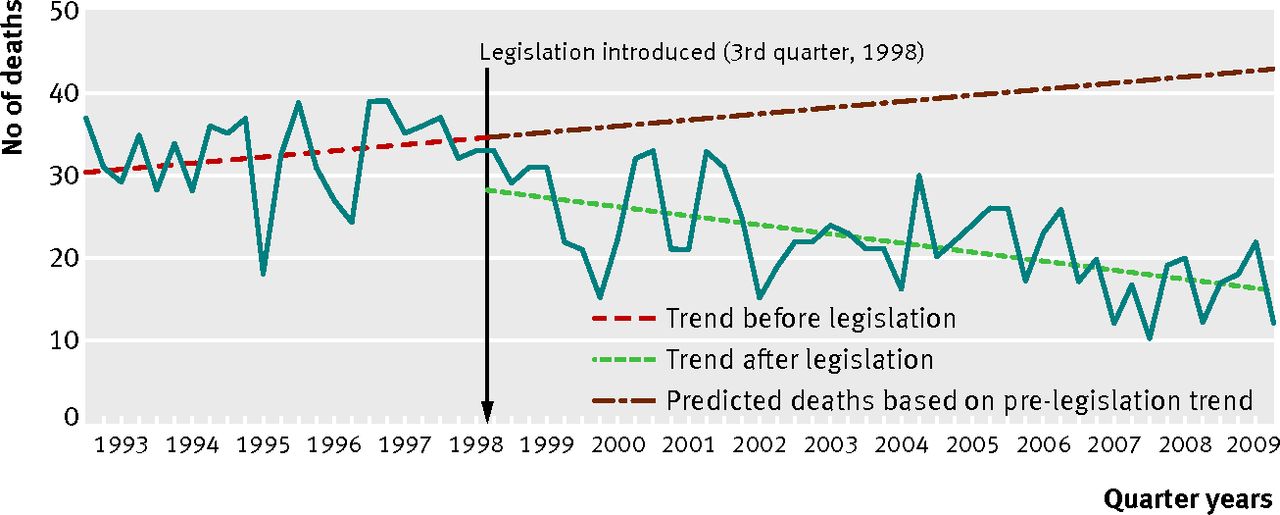
Notably, while many countries have considered whether limiting access to paracetamol could reduce poisoning they have adopted different regulatory approaches. A study of 21 European countries found substantial variation in pharmacy pack limits and whether paracetamol could be sold outside pharmacies. The effects of regulation depend on country-specific factors, which is why domestically-based research is so important.18
In Australia, paracetamol poisoning frequently requires hospital admission for antidote treatment and monitoring. A patient admitted for a one-to-two day hospital stay may incur costs of several thousand dollars, while severe cases requiring intensive care can result in costs running to tens of thousands of dollars. However, innovations such as implementation of the simplified two-bag intravenous acetylcysteine regimen – which reduces treatment-related adverse reactions and simplifies hospital management – can allow hospital resources to be redirected to support other types of patients.
Each year in Australia, around 10,000 people are admitted to hospital following paracetamol poisoning or overdose, more than 200 develop liver injury and about 50 die, with rates of intentional overdose highest among adolescents and young adults.5,19 The human costs extend well beyond those who die or suffer organ damage, encompassing psychological distress, repeated episodes of self-harm, impacts on families and carers, and avoidable disruption to education, employment and community participation. Even modest reductions in the number or severity of cases, or in treatment costs, can deliver significant system-wide savings while preventing substantial harm.
Researchers
Professor Donald Birkett
Donald John Birkett completed his medical degree at the University of Sydney in 1968 and PhD in Biochemistry from Oxford University in 1970. From 1977 he was Professor and Head of Clinical Pharmacology at Flinders University and Flinders Medical Centre. Birkett was Chair of the International Union of Pharmacology Section on Drug Metabolism (1994-1998), a member of the Australian Drug Evaluation Committee, Chair of the Pharmaceutical Benefits Advisory Committee, and Chair of the World Health Organisation (WHO) Working Group on Drug Statistics Methodology.
Professor John Miners
John Oliver Miners completed a Bachelor of Science in 1969 and a PhD in 1974, both at Victoria University of Wellington, New Zealand. Miners was a postdoctoral researcher at Oxford University (1974-1976) and a toxicologist, pharmacologist and professor at Flinders Medical Centre (1977-1996). Miners was a member of the International Association for Therapeutic Drug Monitoring and Clinical Toxicology (1992-1994), Australasian Society for Clinical and Experimental Pharmacology and Toxicology (1986-1990) and International Union Pharmacology (1994-1998).
Professor Andrew Dawson
Andrew H Dawson graduated in medicine in 1980. He is a member of the UK Royal College of Physicians (1984), a fellow of the Royal Australian College of Physicians (1989) and has a Diploma of Clinical Epidemiology (1990). Dawson was until recently the Clinical Director of NSW Poisons Information Centre (NSWPIC) and Director, Clinical Toxicology, Royal Prince Alfred Hospital (RPAH). Dawson was the Program Director of the South Asian Clinical Toxicology Research Collaboration (SACTRC) based in Sri Lanka (2004-2009). Dawson is the past president of the Asia Pacific Association of Medical Toxicology. In 2010, Dawson received the Louis Roche award from the European Association of Poisons Centres and Clinical Toxicologists.
Professor Nicholas Buckley
Nick Buckley completed a medical degree (1985) and a Doctor of Medicine (by research, 1998) at the University of Newcastle. He is Professor of Clinical Pharmacology at the University of Sydney, a consultant clinical toxicologist at NSWPIC, admitting toxicologist at RPAH Sydney, Chair of the Editorial Advisory Board of the Australian Medicines Handbook, Chair of the Australian Therapeutic Guidelines Toxicology and Toxinology writing group, a past President of The Asia Pacific Association of Medical Toxicology, and co-founder of SACTRC.
Professor Geoffrey Isbister AM
Geoffrey Isbister completed a Bachelor of Science in biochemistry (1990) and a medical degree (1994), both at UNSW. Isbister has held medical positions at RPAH (1997-1999) and Royal Darwin Hospital (1999-2000). He has also held academic positions at Monash University (2003-2007) and Menzies School of Health Research in Darwin (2005-2008). Isbister is currently Professor in the Faculty of Medicine and Public Health at the University of Newcastle, a senior consultant in Clinical Toxicology at Calvary Mater Hospital, Newcastle and a consultant in Clinical Pharmacology at Children’s Hospital, Westmead. Isbister has been the recipient of many awards including the 2013 Achievement Award of the Australasian Society of Clinical and Experimental Pharmacologists and Toxicologists. In 2019, Isbister was appointed a Member of the Order of Australia.
Associate Professor Rose Cairns
Rose Cairns completed a Bachelor of Pharmacy (Honours and University Medal) at the University of Sydney in 2011 and then a PhD in 2015. Since 2014 Cairns has been Senior Poisons Specialist then Director Research at NSWPIC at the Children’s Hospital at Westmead. From 2015 to present, Cairns has academic roles at the University of Sydney. Cairns was awarded the NSW Young Tall Poppy of the Year in 2023.
Professor Anselm Wong
Anselm Wong is an Emergency Physician and Clinical Toxicologist with the Monash Emergency Research Collaborative and a Senior Research Fellow in Emergency Medicine and Toxicology at the School of Clinical Sciences at Monash Health, Monash University. He is a Clinical Professor with the University of Melbourne and has a PhD on the management and risk prediction of paracetamol overdose. Wong is a consultant toxicologist with the Austin Toxicology Service, and the Victorian and NSWPIC. Wong was the recipient of the Mollie Holman Medal from Monash University and was awarded the Outstanding Contribution to Medical Toxicology Education Award from the American College of Medical Toxicology.
Professor Angela Chiew
Angela L Chiew completed a Bachelor of Science (Medicine) and Bachelor of Medicine and Bachelor of Surgery with honours, and then (in 2020) a PhD in paracetamol poisoning at the University of Sydney. Chiew has an academic appointment at UNSW and also works in the Prince of Wales Hospital Clinical Toxicology Department and is also the Lead Clinical Toxicologist overseeing and managing the NSWPIC Research Portfolio. Chiew established the Australian Toxicology Monitoring Study and is on the editorial boards of Emergency Medicine Australasia, British Journal of Clinical Pharmacology and Clinical Toxicology, and is the lead author of the Australian and New Zealand Paracetamol Guidelines published in 2015 and 2019.
Professor Helen Christensen AO
Helen Christensen completed an honours degree in psychology at the University of Sydney and a PhD at UNSW. She has held academic appointments at ANU including Director of the Centre for Mental Health, and later at UNSW as Scientia Professor, and served as Executive Director and Chief Scientist of the Black Dog Institute (2011-2021). In 2019, Christensen was appointed an Officer of the Order of Australia.
Professor Alison Calear
Alison L Calear has a Bachelor of Applied Psychology and PhD from ANU. She is a Professor and Co-Head of the Centre for Mental Health Research at ANU and also heads the Child, Youth and Family Mental Health and Suicide Prevention research unit. Calear is a Visiting Professorial Fellow at the UNSW. In 2012 she was awarded the Australian Institute of Policy and Science Tall Poppy Award.
Partners
This case study was developed with input from Professor Nicholas Buckley.
References
The information and images from which Impact Case Studies are produced may be obtained from a number of sources including our case study partner, NHMRC’s internal records and publicly available materials. Key sources of information consulted for this case study include:
1 Rose PG. Paracetamol overdose and liver damage. Br Med J. 1969 Feb 8;1(5640):381-2
2 Miners JO, Attwood J, Birkett DJ. Determinants of acetaminophen metabolism: effect of inducers and inhibitors of drug metabolism on acetaminophen's metabolic pathways. Clin Pharmacol Ther. 1984;35(4):480–486
3 Miners JO, Lillywhite KJ, Yoovathaworn K, Pongmarutai M, Birkett DJ. Characterization of paracetamol UDP‑glucuronosyltransferase activity in human liver microsomes. Biochem Pharmacol. 1990;40(3):595–600
4 Miners JO, Drew R, Birkett DJ. Mechanism of action of paracetamol protective agents in mice in vivo. Biochem Pharmacol. 1984;33(19):2995–3000
5 Cairns R, Brown JA, Wylie CE, Dawson AH, Isbister GK, Buckley NA. Paracetamol poisoning-related hospital admissions and deaths in Australia, 2004-2017. Medical Journal of Australia. 2019;211(5):218-223
6 Kerr F, Dawson A, Whyte IM, Buckley N, Murray L, Graudins A, Chan B, Trudinger B. The Australasian Clinical Toxicology Investigators Collaboration randomized trial of different loading infusion rates of N-acetylcysteine. Ann Emerg Med. 2005 Apr;45(4):402-8
7 Isbister G, Chiew A, Buckley N, Harris K, Berling I, Downes M, Page C, Isoardi K. A non-inferiority randomised controlled trial of a shorter acetylcysteine regimen for paracetamol overdose - the SARPO trial. J Hepatol. 2025 Oct;83(4):881-887
8 Wong A, McNulty R, Hodgson SE, Gunja N, Graudins A. Early Cessation of Acetylcysteine Treatment After Paracetamol Overdose (NACSTOP 2): A Non-Inferiority Randomised Controlled Trial. Med J Aust. 2026 Jan;224(1):e70114
9 Wong A, Isbister GK, McNulty R, Isoardi K, Harris K, Chiew A, et al. Efficacy of a two‑bag acetylcysteine regimen to treat paracetamol overdose (2NAC study). EClinicalMedicine. 2020;20:100288
10 Chiew AL, Reith D, Pomerleau A, Wong A, Isoardi KZ, Soderstrom J, Buckley NA. Updated guidelines for the management of paracetamol poisoning in Australia and New Zealand. Med J Aust. 2020;212(4):175‑183
11 Anand S, Buckley NA, Stathakis P, James L, Parker L, McGill MR, Chiew AL. Effects of Fomepizole on Acetaminophen Oxidative Metabolism: A Randomized, Crossover Study in Human Volunteers. Clin Pharmacol Ther. 2026 Jul 14:10.1002/cpt.70379
12 Chidiac AS, Buckley NA, Noghrehchi F, Isbister GK, Chiew AL, Brett J, Dawson AH, Roberts DM, Cairns R. A comprehensive overview of paracetamol poisoning admissions and long-term outcomes in New South Wales, Australia: a retrospective linked data cohort (PAVLOVA-3). Lancet Reg Health West Pac. 2026 May 28;71:101886
13 Buckley NA, Calear AL, Christensen H, Cairns R, Reily N, Tang S, et al. Independent expert report on the risks of intentional self‑poisoning with paracetamol. Canberra: Therapeutic Goods Administration; 2022. Available from: https://www.tga.gov.au/sites/default/files/2022-09/paracetamol_report_final.pdf
14 Therapeutic Goods Administration. Independent review of paracetamol overdose. Canberra: TGA; 2022. Available from: https://www.tga.gov.au/news/media-releases/independent-review-paracetamol-overdose
15 Black Dog Institute. Black Dog Institute welcomes TGA consultation on possible amendments to the Poisons Standard in relation to paracetamol. 2022. Available from: https://www.blackdoginstitute.org.au/media-releases/black-dog-institute-welcomes-tga-consultation-on-possible-amendments-to-the-poisons-standard-in-relation-to-paracetamol/
16 Daly FF, Fountain JS, Murray L, Graudins A, Buckley NA; Panel of Australian and New Zealand clinical toxicologists. Guidelines for the management of paracetamol poisoning in Australia and New Zealand--explanation and elaboration. A consensus statement from clinical toxicologists consulting to the Australasian poisons information centres. Med J Aust. 2008 Mar 3;188(5):296-301
17 Chiew AL, Fountain JS, Graudins A, Isbister GK, Reith D, Buckley NA. Summary statement: new guidelines for the management of paracetamol poisoning in Australia and New Zealand. Medical Journal of Australia. 2015 Sep;203(5):215-8.
18 Hawton K, Bergen H, Simkin S, Dodd S, Pocock P, Bernal W et al. Long term effect of reduced pack sizes of paracetamol on poisoning deaths and liver transplant activity in England and Wales: interrupted time series analyses BMJ 2013; 346 :f403
19 Therapeutic Goods Administration. TGA makes final decision to reduce paracetamol pack sizes | Therapeutic Goods Administration (TGA) [Internet]. Canberra: Australian Government Department of Health and Aged Care; 2023 May 3 [cited 2026 Sept 28].