We're changing the way Sapphire looks
Same platform, new visual identity. Learn more: Sapphire is becoming NHMRC Grant Management System.
We're changing the way Sapphire looks
Same platform, new visual identity. Learn more: Sapphire is becoming NHMRC Grant Management System.
Keep up with the latest news and stories from NHMRC. Use the search function to browse our articles and latest news.
Our InFocus articles spotlight projects dedicated to advancing human health. Explore these curated stories from the search below.
In our Meet the experts series, we sit down with researchers, clinicians and leaders from across the NHMRC community to explore the people behind the discoveries.
Tune in to our Speaking of Science webinars to hear from top researchers and experts in health and medical research. You can register and join our monthly webinars live or view them later, as they are recorded. Subscribe for notifications about upcoming webinars, so you don’t miss out!
Our Tracker newsletter is produced fortnightly and offers updates on the lasted grant opportunities, guidelines and news for the health and medical research community. Subscribe to receive the newsletter by email or see previous editions in the search field below.
RAO Alerts are emailed directly to Research Administration Officers (RAO) with important updates and timings on our grant opportunities. You can read past editions on the RAO alerts page.
For media enquiries, reach out to us at: media@nhmrc.gov.au or call 0422 008 512.
For more, follow us on social media at: Facebook, X (previously Twitter), Instagram, LinkedIn or YouTube.
Please visit the National Library's Australian Government Web Archive (Trove) for archived articles including Tracker, media releases and RAO alerts.
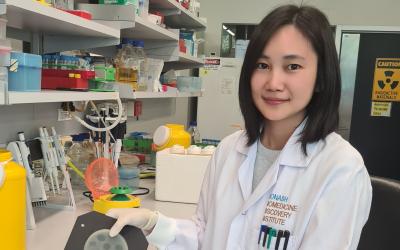
Dr Sue Chin Nang is a Senior Research Fellow and leads the bacteriophage (phage) therapy team in the Laboratory of Antimicrobial Systems Pharmacology at the Biomedicine Discovery Institute, Monash University. Her research tackles the global threat of antimicrobial resistance by combining traditional antibiotics with nontraditional phage approaches. Dr Nang is the recipient of the NHMRC Frank Fenner Investigator Grant Award for her research into combatting antimicrobial resistance through a cell free synthetic biology approach.

NHMRC has introduced new guidance on the use of identifiable images of people in grant applications. The guidance will be introduced in the Grant Opportunity Guidelines for MREA schemes, supported by a new declaration in Sapphire.
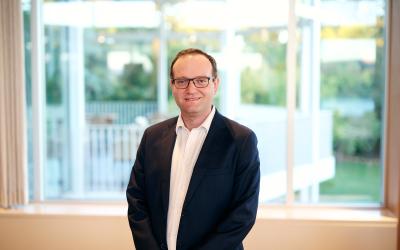
Dr Craig Coorey is a nephrologist at Westmead Hospital and a PhD candidate at the University of Sydney within the Centre for Kidney Research. His research focuses on improving outcomes in kidney transplantation, including donor recipient matching and the prediction and management of complications after transplant. Dr Coorey is the recipient of the NHMRC Gustav Nossal Postgraduate Scholarship Award for his research into improving post kidney transplant outcomes with a patient centred causal inference framework.

National Reconciliation Week (27 May – 3 June) enables us to explore how we can contribute to achieving nationwide reconciliation. The 2026 them, All In, makes it clear that reconciliation is not a spectator sport and that all of us must step away from the sidelines and take action to make real impact.

With a commitment to equity, rigour and impact, Professor Joan Cunningham has worked to improve cancer outcomes for Aboriginal and Torres Strait Islander people through collaborative research aimed at understanding and improving the performance of the health system.

Welcome to Tracker, the National Health and Medical Research Council’s (NHMRC) fortnightly newsletter with the latest information on major activities and funding opportunities.
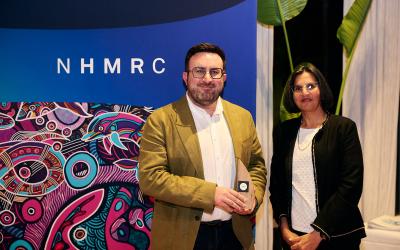
Professor Mark Polizzotto is a clinician scientist who serves as Clinical Director of Cancer Services at Canberra Health Service, where he is a practising haematologist. He is also Head of the Clinical Hub for Interventional Research (CHOIR) at the Australian National University. Professor Polizzotto has dedicated his career to addressing the cancer burden and his work has led to the first new therapy for Kaposi sarcoma in over 20 years and has influenced treatment guidelines globally. He is the recipient of the 2024 NHMRC David Cooper Clinical Trials and Cohort Studies Award.

Professor Shyamali Dharmage, Head of the Allergy and Lung Health Unit and Deputy Director (Research) of the Centre for Epidemiology and Biostatistics, School of Population and Global Health at The University of Melbourne, is redefining chronic obstructive pulmonary disease (COPD) as a preventable life course condition, shifting the focus from late diagnosis to early intervention. Professor Dharmage is the recipient of the NHMRC Elizabeth Blackburn Investigator Grant Award (leadership in public health) for her research into early detection and interventions to stop pre-COPD.
Welcome to Tracker, the National Health and Medical Research Council’s (NHMRC) fortnightly newsletter with the latest information on major activities and funding opportunities.

NHMRC and the Consumers Health Forum of Australia (CHF) have today released the new Statement on Consumer and Community Involvement in Health and Medical Research (the Statement).
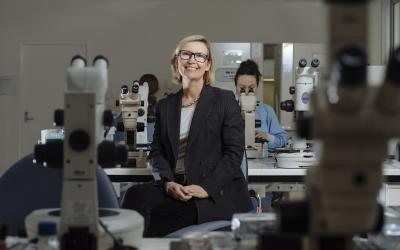
Professor Sarah Robertson AO is a reproductive immunologist and longstanding leader in fertility and pregnancy research at the Adelaide University. Her internationally recognised work has transformed understanding of how immune signalling at conception influences embryo development, implantation, placental formation and pregnancy success. Her research program spans fundamental biology through to translational innovation, with a career distinguished by sustained global impact. Professor Robertson is the recipient of the NHMRC Elizabeth Blackburn Investigator Award for Leadership in Basic Science for her research into periconception mechanisms impacting fertility and pregnancy health.
In a joint funding initiative, NHMRC and Cancer Australia are investing $15 million into high quality health and medical research to enhance understanding of early onset cancer.

Discover how Professor Julie Redfern’s vision for developing innovative digital strategies have transformed cardiovascular disease prevention, reaching beyond traditional programs to deliver health services reform at the national level.

Although there are no effective drugs for severe influenza, a breakthrough led by Associate Professor Michelle Tate, in collaboration with Associate Professor Ashley Mansell, has led to innovative treatments that target the body rather than the virus itself to limit inflammation and ultimately save lives.
Welcome to Tracker, the National Health and Medical Research Council’s (NHMRC) fortnightly newsletter with the latest information on major activities and funding opportunities.

Anxiety disorders are the most prevalent mental health conditions affecting children and adolescents globally. These disorders can appear as early as preschool age and often have significant negative impacts on a young person’s daily life.

The Australian Research Council (ARC) and the National Health and Medical Research Council (NHMRC) have today released updated versions of their respective policies which provide guidance for the use of Generative Artificial Intelligence (AI) by applicants and assessors engaged in the ARC’s National Competitive Grants Program and the NHMRC’s Medical Research Endowment Account (MREA) grant program.
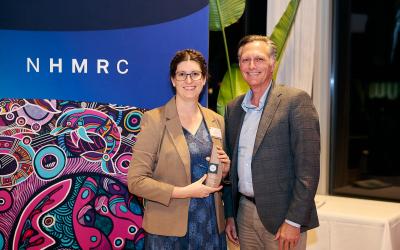
Professor H. Peter Soyer is a world leader in preventative dermato-oncology and pioneered the use of dermoscopy in pigmented skin lesions for early skin cancer detection. He is the inaugural Chair in Dermatology and Director of the Dermatology Research Centre at the Frazer Institute within the University of Queensland. Here he leads a multinational team of dedicated researchers including Dr Katie Lee, who has been researching melanoma herself for over a decade. Under NHMRC Ideas Grant funding, Professor Soyer and Dr Lee, among other chief investigators, are tackling melanoma at the pixel level through deep image analysis. For this innovative research, Professor Soyer is the recipient of the NHMRC Marshall and Warren Ideas Grant Award.

Developed through collaboration with Aboriginal communities, the Kimberley Mum’s Mood Scale (KMMS) improves early detection of mental health and social, emotional and cultural wellbeing concerns and promotes culturally safe care for Aboriginal and Torres Strait Islander women. Its adoption in routine primary health care illustrates the enduring impact of community driven research.

NHMRC is injecting $10.5 million into Australian health and medical research funding to address strategies for supporting health systems to improve equitable health outcomes globally.
Welcome to Tracker, the National Health and Medical Research Council’s (NHMRC) fortnightly newsletter with the latest information on major activities and funding opportunities.
Leading a groundbreaking research project, Professor Hugh McDermott has enhanced the precision of deep brain stimulation for Parkinson's disease, positioning his team at the forefront of the field and revolutionising treatment for patients worldwide.

NHMRC welcomes the announcement by Prime Minister Albanese and European Commission President von der Leyen that Australia will commence formal treaty negotiations on Australia’s association to Horizon Europe. This announcement marks a significant milestone in strengthening Australia’s global research engagement and reflects the Government’s commitment to advancing innovation, economic resilience, and long-term productivity through international collaboration.
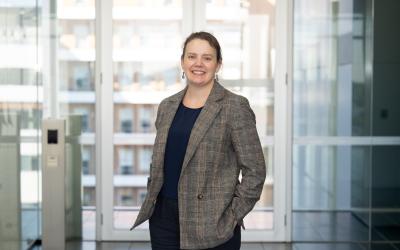
Associate Professor Alisa Glukhova is a Laboratory Head in the Structural Biology Division at WEHI and at the Monash Institute of Pharmaceutical Sciences. Her research focuses on the structural biology of cell-signaling pathways to improve our understanding of what causes diseases such as cancer. Associate Professor Glukhova is the recipient of the NHMRC Peter Doherty Investigator Grant Award (Emerging Leadership) and also the 2026 Commonwealth Health Minister’s Award for Excellence in Health and Medical Research.

The National Health and Medical Research Council (NHMRC) is committed to improving health outcomes for people living in regional, rural and remote (RRR) Australia by supporting health and medical research that benefits local people and communities.
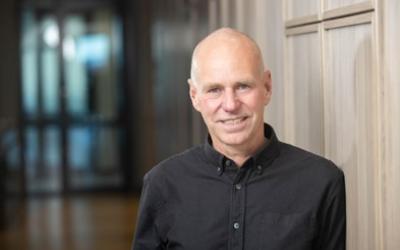
Professor Bruce Neal is Executive Director of the George Institute for Global Health, Professor of Medicine at the University of New South Wales and Professor of Clinical Epidemiology at Imperial College London. He works in the field of cardiovascular disease with a track record in the conduct of large-scale clinical trials. His work has supported the discovery and implementation of both novel drug therapies and dietary interventions. Professor Neal is the inaugural recipient of the brand new NHMRC Michael Alpers Global Health Award, recognising his Investigator Grant research into achieving global health gains from potassium enriched salt.
The National Health and Medical Research Council (NHMRC) has honoured a group of respected researchers for their contributions and commitment to health and medical research excellence.

Australian science is rich in world‑class research and pioneering discoveries that have driven major advances in health care, policy and clinical practice. NHMRC proudly presents the 17th edition of our flagship publication 10 of the Best.
Welcome to Tracker, the National Health and Medical Research Council’s (NHMRC) fortnightly newsletter with the latest information on major activities and funding opportunities.

Oral diseases, such as tooth decay and erosion, are the most prevalent diseases of humankind, affecting nearly 3.5 billion people worldwide.

NHMRC is investing $6.7 million in Aboriginal and Torres Strait Islander research to improve family safety and wellbeing. The funding will support work that builds on cultural knowledge, strengthens communities, and delivers evidence that can make a real difference on the ground.
Welcome to Tracker, the National Health and Medical Research Council’s (NHMRC) fortnightly newsletter with the latest information on major activities and funding opportunities.
Welcome to Tracker, the National Health and Medical Research Council’s (NHMRC) fortnightly newsletter with the latest information on major activities and funding opportunities.

'The first time I stepped into the ICU, I fell in love with the environment. I loved the teamwork – the team are incredibly important to how we care for our patients. The ability to treat patients when they're at their most vulnerable is a real privilege.'
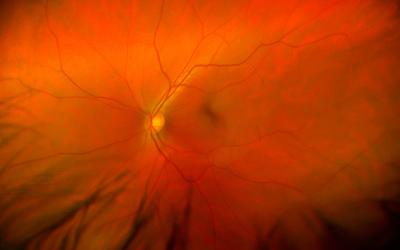
Glaucoma is the leading cause of irreversible blindness worldwide, with an estimated 80 million people affected including more than 200,000 Australians.

The Australian Research Council (ARC) and the National Health and Medical Research Council (NHMRC) are committed to upholding the highest standards of conduct and integrity in the research we fund.
'It's really important that another question that you ask yourself is, is this research going to translate into something that will make a difference?'
Welcome to Tracker, the National Health and Medical Research Council’s (NHMRC) fortnightly newsletter with the latest information on major activities and funding opportunities.
'I think the most important thing is to find something you're really passionate about. If you're passionate, it will be obvious in the way you drive your research and the way you write for grants and papers. That will shine through and everything will just follow.'
Welcome to Tracker, the National Health and Medical Research Council’s (NHMRC) fortnightly newsletter with the latest information on major activities and funding opportunities.

NHMRC remains committed to investing in exceptional research that aims to improve the health and lives of all Australians, and we are proudly the national leading expert body in health and medical research.

NHMRC and the Department of Health, Disability and Ageing, responsible for the Medical Research Future Fund (MRFF), have launched a joint Open Science Policy. This policy marks a step forward in Australia’s commitment to research that is open, rigorous, and designed to benefit everyone.
Welcome to Tracker, the National Health and Medical Research Council’s (NHMRC) fortnightly newsletter with the latest information on major activities and funding opportunities.

The National Health and Medical Research Council (NHMRC) is investing over $4 million to support international collaborative grants in health and medical research that address chronic pain.
NHMRC is investing $55 million towards 11 outstanding teams of researchers, from a range of disciplines, who will answer major health and medical research questions that cannot be answered by a single researcher through NHMRC Synergy Grants.

NHMRC is investing $10.1 million to support the next generation of outstanding health and medical research graduates.
NHMRC is driving the translation of health and medical research translation into commercialisation pathways through a $16.5 million investment.

NHMRC is investing almost $280 million to support 190 innovative projects that address specific questions in medical research that contribute to the improvement of human health.
The Australian Government is investing $4.4 million to boost research innovation in the East Asia region by supporting participation in leading international collaborative health and medical research.

The limitations of Body Mass Index (BMI) measurements are well documented in health and medical research and yet it remains the sole diagnostic tool for obesity.