We're changing the way Sapphire looks
Same platform, new visual identity. Learn more: Sapphire is becoming NHMRC Grant Management System.
We're changing the way Sapphire looks
Same platform, new visual identity. Learn more: Sapphire is becoming NHMRC Grant Management System.

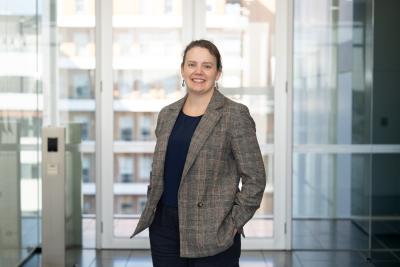
Associate Professor Alisa Glukhova is a Laboratory Head in the Structural Biology Division at WEHI and at the Monash Institute of Pharmaceutical Sciences. Her research focuses on the structural biology of cell-signaling pathways to improve our understanding of what causes diseases such as cancer. Associate Professor Glukhova is the recipient of the NHMRC Peter Doherty Investigator Grant Award (Emerging Leadership) and also the 2026 Commonwealth Health Minister’s Award for Excellence in Health and Medical Research.
I fell in love with structural biology after seeing my first protein crystal during my PhD at the University of Michigan in America. The idea that biology can be understood just by looking at it – really looking at it, at the level of individual molecules – still fascinates me to this day.
That fascination first led me to x-ray crystallography, and eventually to cryo-electron microscopy which are techniques that allow us to see and understand the proteins that our cells are built from.
For the past decade, my research has focused on G protein coupled receptors (GPCRs) which are a large family of membrane proteins that share a common architecture. They receive signals from outside the cell and transform them into complex signalling cascades within it. These receptors are some of the most utilised targets for drug discovery.
I began working on GPCRs when I came to Melbourne for a postdoctoral fellowship at the Monash Institute of Pharmaceutical Sciences. Here I studied adenosine receptors and their role in pain signalling and cardiovascular disease in the Christopoulos lab, as well as class B peptide hormone receptors in the Sexton/Wootten lab. During that time, I made a deliberate decision to move into cryo-electron microscopy, when it became clear that the technique was maturing rapidly and would allow us to study systems that had resisted crystallography for years.
After starting my own lab at WEHI 6 years ago, I shifted my focus towards the evolutionarily, yet ancient, Wnt signalling pathway. This system controls how tissues form in an embryo and it is crucial for maintaining a balance between stem and specialised cell populations throughout adult life.
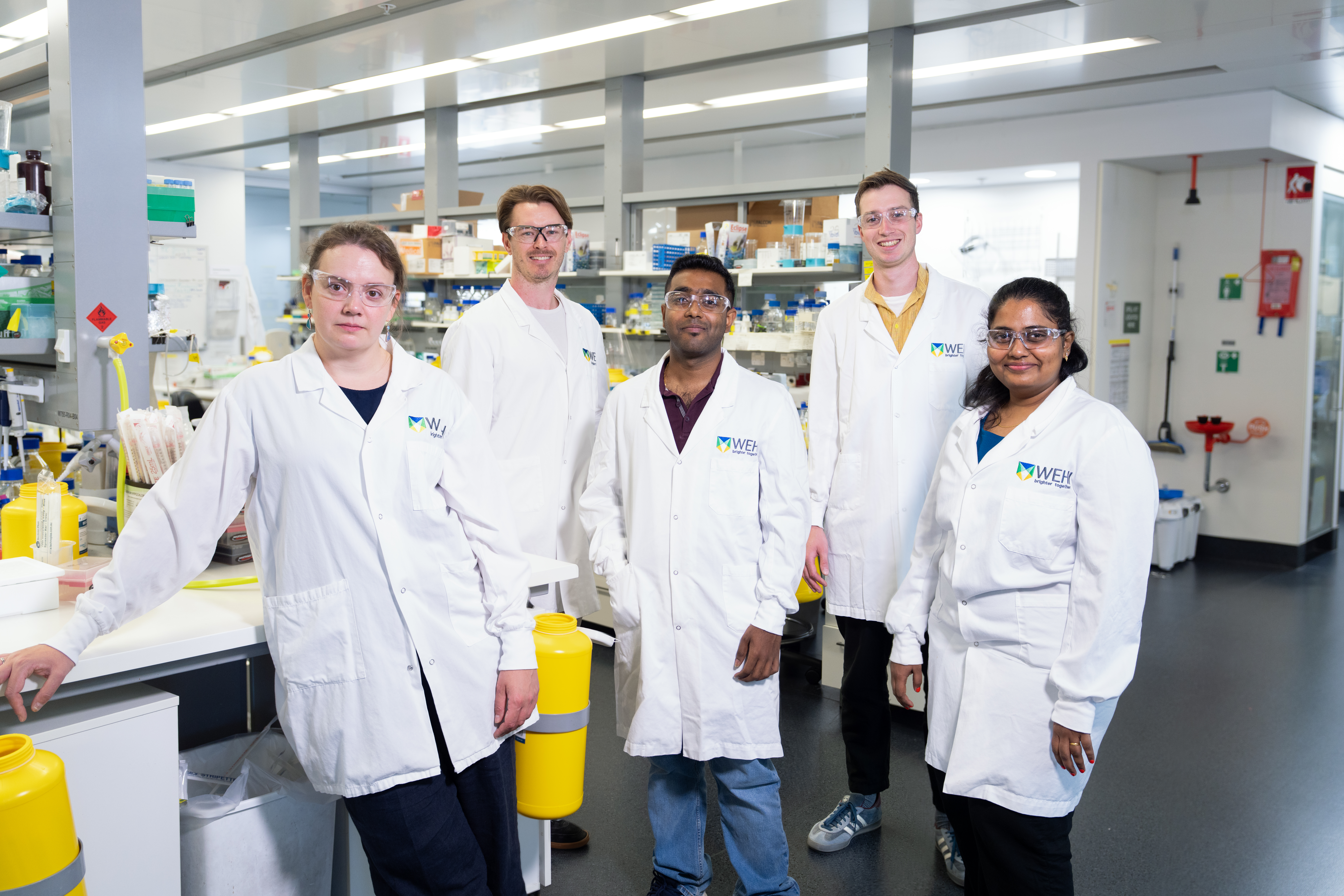
It is frequently dysregulated in cancers, and it is an area of active interest for targeting human malignancies. The Wnt receptors, called Frizzled receptors, share the same basic architecture as the GPCRs I studied previously, but they are unusual in many of their properties and in the type of signalling cascades they can initiate. Their signalling is particularly complex and poorly understood, limiting our ability to utilise it therapeutically. That is the problem my laboratory is working to solve.
My research program examines Wnt receptors both as classical GPCRs and as components of Wnt specific signalling, where they assemble large macromolecular complexes at the cell membrane. We are working to understand what these signalling complexes look like and what role they play in the signalling process.
We are also developing methods to interfere with these processes at the point where signalling is initiated at the membrane. To this end, we are developing biological therapies in collaboration with the Centre for Biologic Therapies at WEHI.
While this work sits at the basic end of the research spectrum, it is the kind of mechanistic understanding that makes drug development possible.
Decades of curiosity driven structural work on GPCRs have repeatedly handed pharmacologists druggable targets, and I am confident that the fundamental research we are doing here in Australia will do the same for the Wnt pathway.
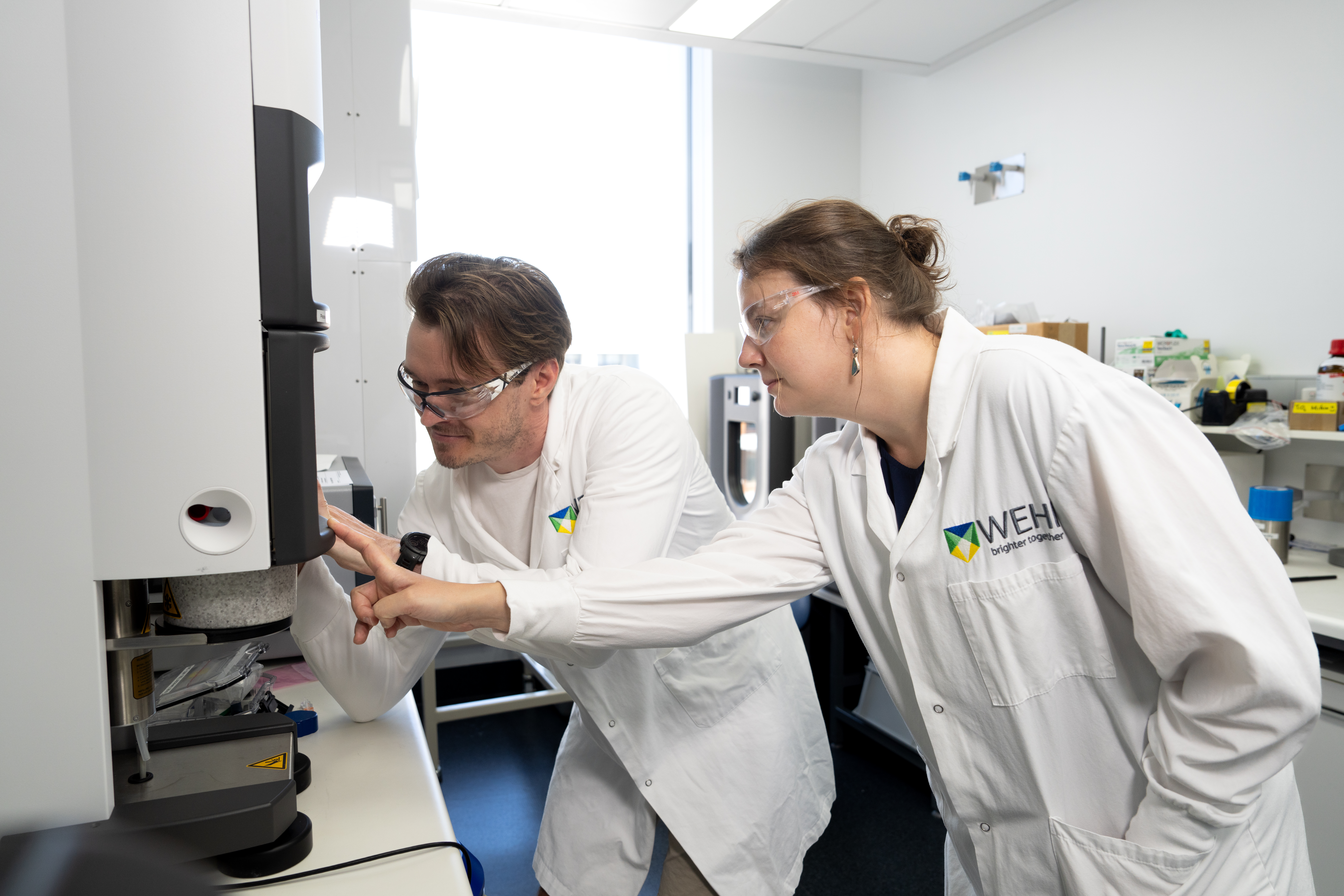
I am deeply honoured and grateful to receive this NHMRC award. It would not have been possible without my research team, the continuing support of WEHI, the support of the Monash Institute of Pharmaceutical Sciences during my postdoctoral training, and the guidance of my mentors throughout my scientific journey.
I have been fortunate in my collaborators and in the people who believed in this work, as well as the funders who gave me the resources and the time to follow the science where it leads such as NHMRC, Snow Medical, and the CSL Centenary Fund, as well as the Akos & Marjorie Talon bequest.