We're changing the way Sapphire looks
Same platform, new visual identity. Learn more: Sapphire is becoming NHMRC Grant Management System.
We're changing the way Sapphire looks
Same platform, new visual identity. Learn more: Sapphire is becoming NHMRC Grant Management System.
Keep up with the latest news and stories from NHMRC. Use the search function to browse our articles and latest news.
Our InFocus articles spotlight projects dedicated to advancing human health. Explore these curated stories from the search below.
In our Meet the experts series, we sit down with researchers, clinicians and leaders from across the NHMRC community to explore the people behind the discoveries.
Tune in to our Speaking of Science webinars to hear from top researchers and experts in health and medical research. You can register and join our monthly webinars live or view them later, as they are recorded. Subscribe for notifications about upcoming webinars, so you don’t miss out!
Our Tracker newsletter is produced fortnightly and offers updates on the lasted grant opportunities, guidelines and news for the health and medical research community. Subscribe to receive the newsletter by email or see previous editions in the search field below.
RAO Alerts are emailed directly to Research Administration Officers (RAO) with important updates and timings on our grant opportunities. You can read past editions on the RAO alerts page.
For media enquiries, reach out to us at: media@nhmrc.gov.au or call 0422 008 512.
For more, follow us on social media at: Facebook, X (previously Twitter), Instagram, LinkedIn or YouTube.
Please visit the National Library's Australian Government Web Archive (Trove) for archived articles including Tracker, media releases and RAO alerts.

Welcome to Tracker, the National Health and Medical Research Council’s (NHMRC) fortnightly newsletter with the latest information on major activities and funding opportunities.

A new name and look for NHMRC's grant management platform. NHMRC is updating the name and branding of its grant management platform, Sapphire.
Welcome to this special edition of Tracker.

Australia’s population is rapidly ageing and as the population ages, so does the prevalence of multiple chronic conditions such as cardiovascular disease. This leads to a growth in the number of frail older adults in acute care settings.
Welcome to Tracker, NHMRC’s fortnightly newsletter with the latest information on major activities and funding opportunities.

Welcome to this special edition of Tracker.
Nominations are now open for the 2027 NHMRC Biennial Awards, celebrating the people and teams whose work is shaping the future of health and medical research in Australia.
In this special edition, you'll find everything you need to know about the awards, including award categories, eligibility requirements and how to submit a nomination.
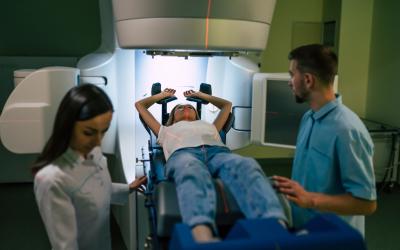
During breast cancer radiation therapy, the heart can receive a significant dose of radiation. To reduce this, patients are treated while holding their breath, also known as Deep Inspiration Breath Hold (DIBH). Read how Professor Joerg Lehmann has successfully developed a first ever monitoring system to continuously and directly measure DIBH to assure optimal radiation delivery to patients.

Beginning in the 1990s, researchers at the Children’s Cancer Institute received a succession of NHMRC grants to support research focused on childhood cancers.
Welcome to Tracker, NHMRC’s fortnightly newsletter with the latest information on major activities and funding opportunities.

Research Translation Centres foster collaboration, build research capability and support health service led innovation. This has helped improve health outcomes and strengthen Australia's health and medical research translation ecosystem.

NHMRC is supporting health and medical research partnerships that will improve health services across Australia. This project is a part of a broader Australian Government investment of $17.3 million, with an additional $27.7 million committed by funding partners.

Immune related diseases affect millions of people worldwide, driving an urgent need for research that can be translated into better treatments and health outcomes.
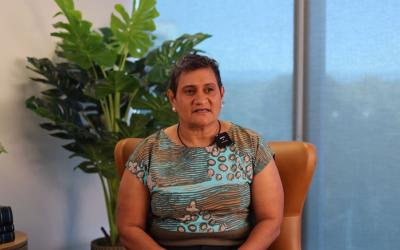
Aboriginal and Torres Strait Islander peoples continue to experience significant health inequities, making culturally informed, community led research more important than ever.
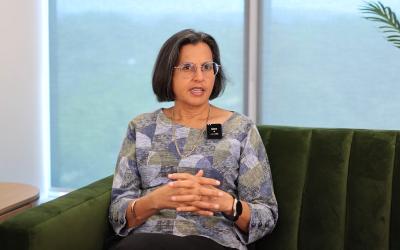
Cardiovascular disease remains the leading cause of death worldwide, affecting hundreds of millions of people each year.

From 2021–22 to 2024–25, the Medical Research Future Fund (MRFF) and the National Health and Medical Research Council (NHMRC) invested almost $6.5 billion in strengthening Australia's research capability and improving health outcomes for Australians.
Welcome to Tracker, NHMRC’s fortnightly newsletter with the latest information on major activities and funding opportunities.
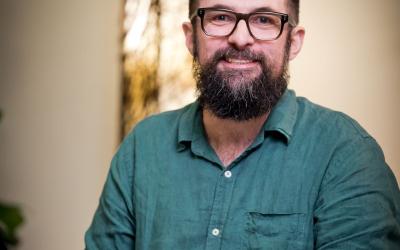
Wiradjuri man, Adam Heterick, has built his career as Australia’s first Indigenous bioinformatician at the intersection of genomics, data science and community-led health research.

Poor oral health affects billions of people worldwide and is one of the most common chronic health conditions, impacting wellbeing, quality of life and overall health. Research that prevents disease before it starts has the potential to improve outcomes for individuals while reducing pressure on health systems.

Drug use and dependence contribute significantly to illness, injury and premature death worldwide, creating major challenges for individuals, families and health systems.

NHMRC is investing $66 million into 22 new centres of research excellence, collectively aiming to improve health outcomes and promote or improve translation of research into policy and practice.
Welcome to Tracker, NHMRC’s fortnightly newsletter with the latest information on major activities and funding opportunities.

Landmark joint meeting of the ARC Board and NHMRC Council.
NHMRC’s history in developing dietary advice during pregnancy, lactation and early infant feeding dates to the 1980s where early recommendations were made to those providing direct care to pregnant and lactating women to meet the nutrient requirements for both the mother and their baby.
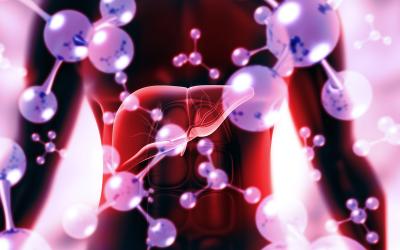
Ageing is driven by an accumulation of molecular and cellular damage over time. Professor Victoria Cogger is exploring how we might one day be able to reduce the rate or even reverse the process of ageing by starting with one of the body’s most critical organs, the liver.
Welcome to Tracker, NHMRC’s fortnightly newsletter with the latest information on major activities and funding opportunities.
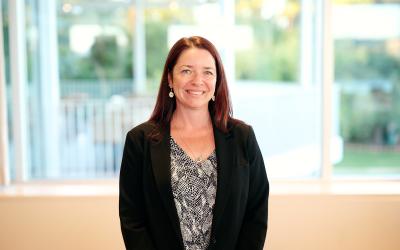
Associate Professor BJ Newton is a proud Wiradjuri woman and one of Australia’s leading researchers in child protection policy and outcomes for Aboriginal children. She leads the ‘Bring Them Home, Keep Them Home’ research program – the first international study examining restoration rates, outcomes and lived experiences of Aboriginal children in out of home care. Associate Professor Newton is the recipient of the NHMRC Sandra Eades Investigator Grant Award for her research into understanding systems abuse and Aboriginal resistance in child protection contexts.

Discover the inspiring journey of Professor Cath Chamberlain – a dedicated midwife and researcher, as she shines a light on Indigenous parents experiencing intergenerational trauma and aims to improve support for parents to heal the past by nurturing the future.
Welcome to Tracker, NHMRC’s fortnightly newsletter with the latest information on major activities and funding opportunities.
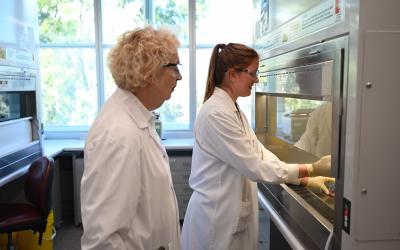
‘What happens when the body's natural controls on cell growth break down?’

Professor Rebecca Bentley is a public health researcher at the University of Melbourne, Healthy Housing Research Lead at the Melbourne School of Population and Global Health, and Director of the Centre of Excellence in Healthy Housing. Her research examines how housing affordability, security and suitability shape population health and health inequalities, with a focus on reducing the health burden associated with poor housing conditions. Professor Bentley is the recipient of the NHMRC Fiona Stanley Synergy Grant Award for her research into addressing the public health challenge of mould in homes.

NHMRC is investing almost one million dollars for international collaborations in medical research through the NHMRC-Horizon Europe grant scheme.

NHMRC is investing $430 million into Australia’s outstanding health and medical research to support our nation’s highest performing investigators through our Investigator Grants scheme.
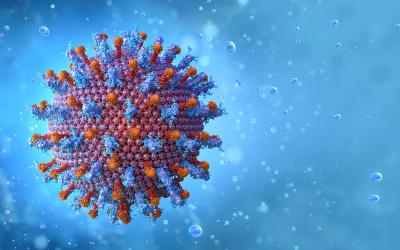
Developed by Associate Professor Jess Howell, a point of care test that uses a single droplet of blood to measure liver damage has the potential to revolutionise the diagnosis and treatment of hepatitis B for populations worldwide.

NHMRC is supporting research to better understand and improve the health of people experiencing unstable housing conditions.
Welcome to Tracker, the National Health and Medical Research Council’s (NHMRC) fortnightly newsletter with the latest information on major activities and funding opportunities.
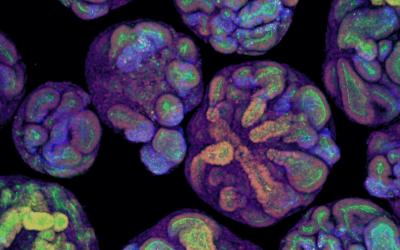
‘The big question I’ve been trying to answer for almost 35 years is, how you recreate a kidney.’ – Professor Melissa Little
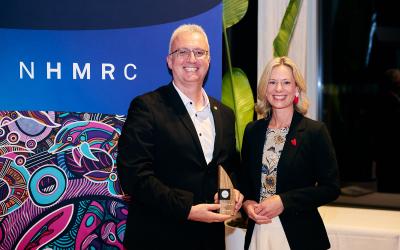
Professor Arthur Christopoulos is the Professor of Analytical Pharmacology and Dean of the Faculty of Pharmacy and Pharmaceutical Sciences at Monash University. He is a world leader in drug discovery of G protein coupled receptors (GPCRs), particularly through multidisciplinary studies of allosteric modulation and biased agonism as novel biological paradigms to treat a broad range of diseases. Professor Christopoulos is the recipient of the NHMRC Peter Doherty Investigator Grant Award (Leadership) for his research into allosteric modulation of muscarinic receptors for the treatment of neurocognitive deficits.

For 50 deadly years, NAIDOC Week has been a platform to celebrate the steady, unapologetic and proud voices of Aboriginal and Torres Strait Islander communities. NAIDOC Week provides an opportunity to reflect on the stories, marches, languages, art and leadership grounded in Aboriginal and Torres Strait Islander history.

Bowel cancer is Australia’s second most common cause of cancer related death in Australia.
Welcome to Tracker, the National Health and Medical Research Council’s (NHMRC) fortnightly newsletter with the latest information on major activities and funding opportunities.
The National Health and Medical Research Strategy 2026–2036, presented by the Chair of the National Strategy, Ms Rosemary Huxtable AO PSM, sets out a 10-year vision for strengthening Australia’s health and medical research system and improving outcomes for the community. A webinar was hosted on Friday 26 June to walk through the strategy.
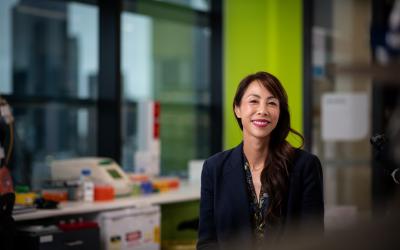
Professor Sherene Loi is a breast medical oncologist and clinician scientist at the Peter MacCallum Cancer Centre, where she leads a research program integrating tumour immunology, genomics and clinical trials to improve breast cancer outcomes. Her internationally recognised work has defined how immune cells within breast tumours and normal breast tissue influence cancer risk, prognosis and treatment response. Professor Loi is the recipient of the NHMRC Elizabeth Blackburn Investigator Grant Award for leadership in Clinical Medicine and Science for her research into breast cancer immunology and prevention.

NHMRC is supporting health and medical research partnerships that will improve health services and processes within Australia through an investment worth more than $31 million.
Welcome to Tracker, the National Health and Medical Research Council’s (NHMRC) fortnightly newsletter with the latest information on major activities and funding opportunities.

Professor Karen Canfell AC’s research has impacted cancer control policy across multiple cancers. Her team’s modelling and clinical trial findings on cervical screening in a Human Papilloma Virus (HPV) vaccinated population were central to the 2017 transition of Australia's National Cervical Screening Program to primary HPV screening. Her work has supported the Australian and World Health Organization (WHO) strategies to accelerate the elimination of cervical cancer, and her team continues to support WHO global guidelines for cervical screening. Professor Canfell is the recipient of the NHMRC Elizabeth Blackburn Investigator Grant Award for Leadership in Health Services Research for her research into the effective implementation and scale up of the WHO strategy to eliminate cervical cancer in Australia, the Indo-Pacific and globally.
Welcome to Tracker, the National Health and Medical Research Council’s (NHMRC) fortnightly newsletter with the latest information on major activities and funding opportunities.

To help drive equitable health outcomes for Aboriginal and Torres Strait Islander communities, NHMRC is asking all grant applicants to consider the potential impacts and benefits of their research for Indigenous health in more schemes in 2026.
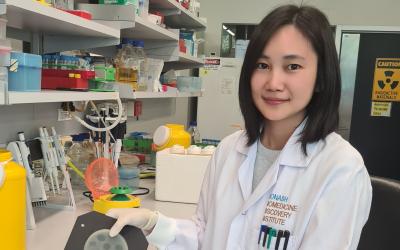
Dr Sue Chin Nang is a Senior Research Fellow and leads the bacteriophage (phage) therapy team in the Laboratory of Antimicrobial Systems Pharmacology at the Biomedicine Discovery Institute, Monash University. Her research tackles the global threat of antimicrobial resistance by combining traditional antibiotics with nontraditional phage approaches. Dr Nang is the recipient of the NHMRC Frank Fenner Investigator Grant Award for her research into combatting antimicrobial resistance through a cell free synthetic biology approach.

NHMRC has introduced new guidance on the use of identifiable images of people in grant applications. The guidance will be introduced in the Grant Opportunity Guidelines for MREA schemes, supported by a new declaration in Sapphire.
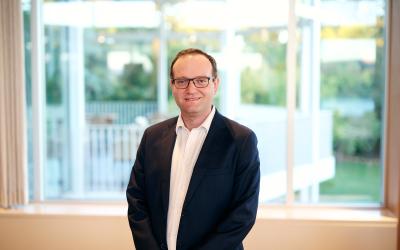
Dr Craig Coorey is a nephrologist at Westmead Hospital and a PhD candidate at the University of Sydney within the Centre for Kidney Research. His research focuses on improving outcomes in kidney transplantation, including donor recipient matching and the prediction and management of complications after transplant. Dr Coorey is the recipient of the NHMRC Gustav Nossal Postgraduate Scholarship Award for his research into improving post kidney transplant outcomes with a patient centred causal inference framework.