We're changing the way Sapphire looks
Same platform, new visual identity. Learn more: Sapphire is becoming NHMRC Grant Management System.
We're changing the way Sapphire looks
Same platform, new visual identity. Learn more: Sapphire is becoming NHMRC Grant Management System.
Search our publications on this page including annual reports and corporate plans, guidelines, reports, statements and 10 of the Best.
For case studies, fact sheets, guidance, policies, and video see our Resources.
If you are unable to find what you are looking for, you can search for archived publications on the National Library's Australian Government Web Archive (Trove).

The Infant Feeding Guidelines are written to assist health workers provide consistent advice about breastfeeding and infant feeding. They provide a review of the evidence, and clear evidence-based recommendations on infant feeding for health workers.
The aim of the statement is to provide the general public with information on the assessment and management of cancer clusters. It is intended to support guidelines issues by State and Territory Departments and Cancer Councils.

Published during NHMRC’s 75th anniversary year, 10 of the Best: 2011 showcases 10 outstanding health and medical research projects supported by NHMRC.
The Australian Drinking Water Guidelines (the Guidelines) provide guidance to water regulators and suppliers on monitoring and managing drinking water quality.
The Guidelines are available for download below, or in a digital format.

The Report of the Independent Review of the Prohibition of Human Cloning for Reproduction Act 2002 and the research involving human embryos Act 2002 offers a review of legislation regarding the use of human clones for reproduction and the use of human embryos in research.

The Procedures and requirements for meeting the 2011 NHMRC standard for clinical practice guidelines are designed to support guideline developers, including those seeking NHMRC approval, to ensure that guidelines are developed to the highest standard.
This version (1.2) has been superseded by Procedures and Requirements for Meeting the NHMRC Standards for Clinical Practice Guidelines, version 2.0. It applies only to externally developed clinical practice guidelines for which an intention to seek NHMRC approval was registered on or before 30 June 2025.

The Community water planner: A tool for small communities to develop drinking water management plans was a web-based tool developed to help assess and manage the risks in remote Australian community water supplies. This tool is no longer available.

Iodine is an essential nutrient that humans need in very small quantities. The thyroid uses iodine to produce hormones vital to ensure normal development of the brain and nervous system before birth, in babies and young children. For this reason, it is very important that pregnant and breastfeeding women get enough iodine.

10 of the Best: 2010 showcases 10 outstanding Australian health and medical research projects supported by NHMRC.

The Vitamin K administration to newborn infants to prevent vitamin K deficiency bleeding in infancy recommendations for Vitamin K to be given to newborn children.

Road map II: A strategic framework for improving the health of Aboriginal and Torres Strait Islander people through research will be used by the NHMRC’s Research Committee to identify research topics requiring priority funding.

The paper identifies key issues that should be considered in relation to genetic testing, and identifies relevant resources, guidelines, standards, and requirements that are pertinent for the delivery of genetic testing in Australia.
This paper provides information on the establishment, management and governance of biobanks in Australia. A biobank is a collection of human biological material held for health and medical research. Biobanks facilitate this research, while protecting participants’ interests and privacy.

10 of the Best: 2009 showcases 10 outstanding Australian health and medical research projects supported by NHMRC.

The Guidelines to promote the wellbeing of animals used for scientific purposes: The assessment and alleviation of pain and distress in research animals (2008) provide guidance on how to support and safeguard the wellbeing of animals used for scientific purposes.
Notice: This publication is more than five years old and may no longer reflect current evidence or best practice.

10 of the Best Research Projects 2008 showcases 10 Australian health and medical research projects chosen from among the thousands of NHMRC funded medical research projects in Australia.
Find other editions of 10 of the Best.

The Australian Guidelines for Water Recycling: Augmentation of drinking water supplies builds on guidance provided in Phase 1 on the planned use of recycled water (treated sewage and stormwater) to top up drinking water supplies.

NHMRC provides advice about the care of people in post-coma unresponsiveness (vegetative state) or a minimally responsive state.

These Guidelines aim to protect Australians from threats posed by the recreational use of coastal, estuarine and fresh water environments.
These Guidelines are currently being updated by NHMRC’s Recreational Water Quality Advisory Committee. For information on the update of these guidelines see the project summary page.
This criteria must be used for determining embryos that are considered unsuitable for implantation and that may be used for research. The NHMRC will continue to work with the scientific community to update and refine these Objective Criteria as additional scientifically authenticated information becomes available.
Human Research Ethics Committees (HRECs) have a difficult and sometimes controversial role in guiding the Australian research community’s work with people. Challenging ethical issues in contemporary research on human beings focuses on some of the most challenging ethical issues using case studies and through discussions.

These guidelines outline ethical principles for health professionals involved in donation after death and provide guidance on how these principles can be put into practice.

This booklet aims to help people think through some ethical issues and make decisions about living organ and tissue donation. If you are thinking of making a living donation, the doctors caring for you can give you more information that is relevant to your situation.

The booklet aims to help people think through some ethical issues and make informed decisions about organ and tissue donation after death.

These guidelines outline ethical practice for health professionals involved in living organ and tissue donation and provides guidance on how these principles can be put into practice.

The Australian Code for the Responsible Conduct of Research, 2007 (the 2007 Code) guides institutions and researchers in responsible research practices and promotes research integrity. It assists institutions in developing their own employee codes of conduct and procedures for the investigation of allegations of research misconduct by providing a comprehensive framework of acceptable academic standards.

This document outlines required essential nutrient intake believed adequate to meet the nutritional needs of the majority of healthy people to prevent deficiency and toxicity from excess. The document can be used by health professionals to assess the likelihood of inadequate or excess intake in individuals or groups.

10 of the Best: 2006 showcases 10 outstanding Australian health and medical research projects supported by NHMRC.

Keeping research on track: a guide for Aboriginal and Torres Strait Islander peoples about health research ethics was designed for Aboriginal and Torres Strait Islander communities when they are considering conducting or being involved with health research.

10 of the Best: 2005 showcases 10 outstanding Australian health and medical research projects supported by NHMRC.
Review of the use of microwave therapy for the treatment of patients with cancer is the final report on the therapeutic effectiveness of microwave (UHF radiowave) cancer therapy as practised by Dr John Holt in Western Australia.
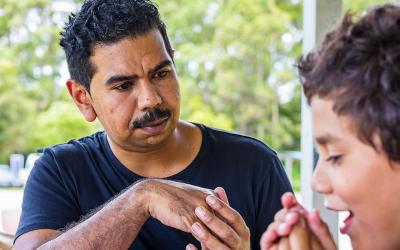
This document provided guidance to researchers and Human Research Ethics Committees on the complex considerations necessary in the conception, design and conduct of appropriate research in Aboriginal and Torres Strait Islander communities.

The Australian Health Ethics Committee is concerned with the ethical implications of medical research and practice and of health care in general. One of the committee's major current interests is in the ethics of health care resource allocation. This is the second paper of a series on this topic.