We're changing the way Sapphire looks
Same platform, new visual identity. Learn more: Sapphire is becoming NHMRC Grant Management System.
We're changing the way Sapphire looks
Same platform, new visual identity. Learn more: Sapphire is becoming NHMRC Grant Management System.
Recreational water includes natural and artificial water bodies used for leisure activities like swimming and boating, excluding chemically disinfected facilities such as pools. The NHMRC provides guidelines to manage health risks associated with these waters. These guidelines are currently being updated and are open for public consultation.
Recreational water refers to many types of natural and artificial bodies of water (such as lakes, rivers, thermal springs, water holes and beaches) that are used for leisure and outdoor activities. This includes all sorts of activities that may or may not involve being in the water, such as swimming, fishing, boating and cultural activities.
Recreational water does not include water bodies that use chemical disinfection, such as aquatic facilities (swimming pools, spas or water theme parks).
NHMRC is responsible for the Guidelines for Managing Risks in Recreational Water (2008) (the Guidelines). The purpose of the Guidelines is to help identify and manage health risks associated with recreational water. These Guidelines help protect public health to keep water activities enjoyable and as safe as possible.
The Guidelines are currently being updated by NHMRC with support from the Recreational Water Quality Advisory Committee. Public consultation on the draft Guidelines was open from 15 January to 27 February 2026. The revised Guidelines are anticipated to be published in late 2026 pending advice from NHMRC Council and final CEO approval.
When people think of harm from water activities in Australia, incidents such as drownings, injuries or animal encounters might come to mind first. However, surface waters such as lakes, rivers and beaches can contain harmful substances which may lead to significant illness or discomfort, as noted in Figure 1 - Main types of water quality hazards associated with recreational water.
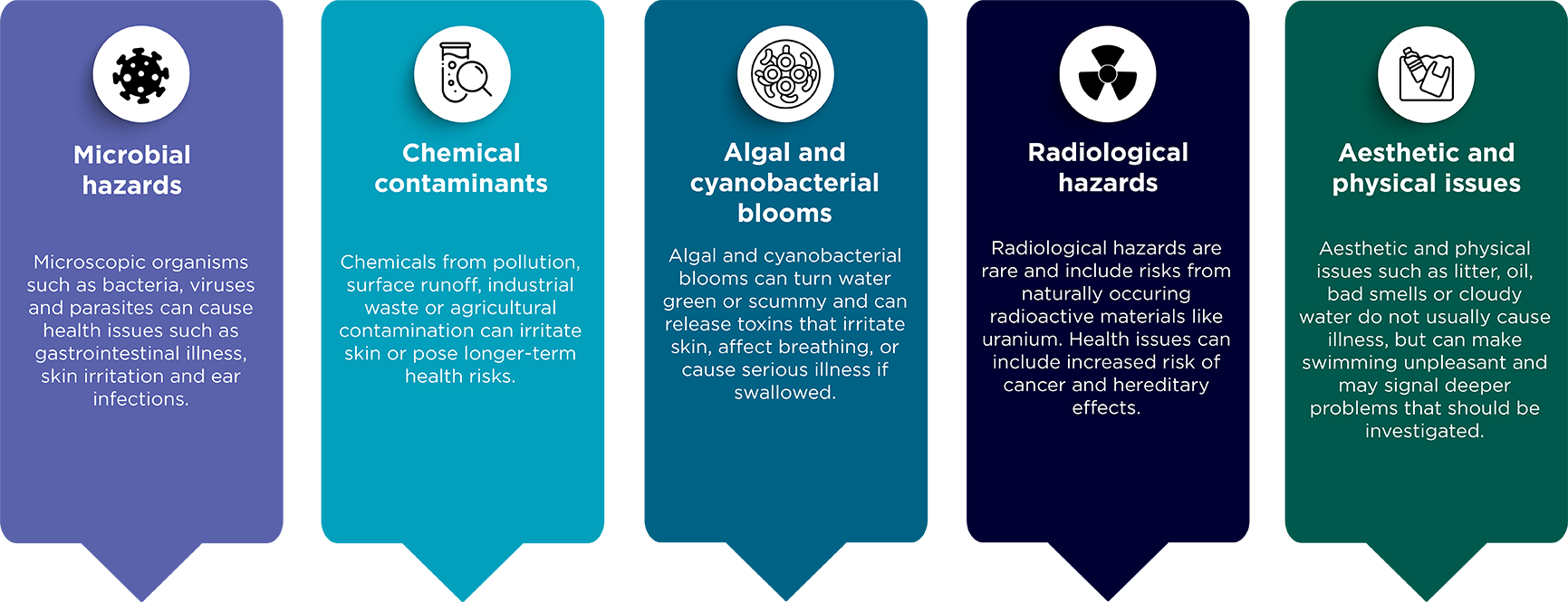
An infographic explaining the main types of water quality hazards associated with recreational water
Further information on these specific types of hazards are provided in the Questions-and-Answers resource.
You can be exposed to risks in recreational water through:
Your exposure depends on what you do in the water. Activities like swimming or diving (where your head goes under and you might swallow water) lead to higher exposure. Activities with less water contact, like kayaking or canoeing, usually mean lower exposure.
These risks don’t mean you should avoid the water altogether—most public sites are safe and well-managed. However, knowing what to look out for and following simple advice will help you protect yourself and others when participating in recreational water activities.
Before you enter the water:
Stay out of the water:
While in the water:
After recreational activities:
Help keep the water clean:
Follow local rules and advisories.
A more detailed list on water quality and other hazards that may be present in recreational water is available in the draft Information sheet – Resources on water quality and other hazards in the draft Guidelines currently out for public consultation.