We're changing the way Sapphire looks
Same platform, new visual identity. Learn more: Sapphire is becoming NHMRC Grant Management System.
We're changing the way Sapphire looks
Same platform, new visual identity. Learn more: Sapphire is becoming NHMRC Grant Management System.
Keep up with the latest news and stories from NHMRC. Use the search function to browse our articles and latest news.
Our InFocus articles spotlight projects dedicated to advancing human health. Explore these curated stories from the search below.
In our Meet the experts series, we sit down with researchers, clinicians and leaders from across the NHMRC community to explore the people behind the discoveries.
Tune in to our Speaking of Science webinars to hear from top researchers and experts in health and medical research. You can register and join our monthly webinars live or view them later, as they are recorded. Subscribe for notifications about upcoming webinars, so you don’t miss out!
Our Tracker newsletter is produced fortnightly and offers updates on the lasted grant opportunities, guidelines and news for the health and medical research community. Subscribe to receive the newsletter by email or see previous editions in the search field below.
RAO Alerts are emailed directly to Research Administration Officers (RAO) with important updates and timings on our grant opportunities. You can read past editions on the RAO alerts page.
For media enquiries, reach out to us at: media@nhmrc.gov.au or call 0422 008 512.
For more, follow us on social media at: Facebook, X (previously Twitter), Instagram, LinkedIn or YouTube.
Please visit the National Library's Australian Government Web Archive (Trove) for archived articles including Tracker, media releases and RAO alerts.

For 90 years, the National Health and Medical Research Council (NHMRC) has helped drive the health of Australians through investment in research, evidence and innovation.
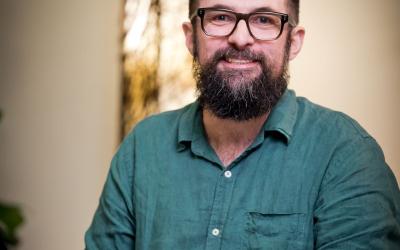
Wiradjuri man, Adam Heterick, has built his career as Australia’s first Indigenous bioinformatician at the intersection of genomics, data science and community-led health research.
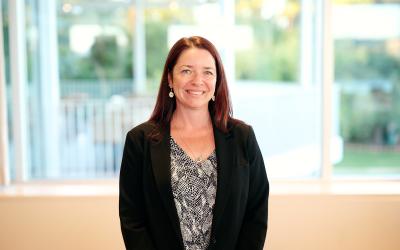
Associate Professor BJ Newton is a proud Wiradjuri woman and one of Australia’s leading researchers in child protection policy and outcomes for Aboriginal children. She leads the ‘Bring Them Home, Keep Them Home’ research program – the first international study examining restoration rates, outcomes and lived experiences of Aboriginal children in out of home care. Associate Professor Newton is the recipient of the NHMRC Sandra Eades Investigator Grant Award for her research into understanding systems abuse and Aboriginal resistance in child protection contexts.

Yvette Roe is a proud Njikena Jawuru woman from the West Kimberley and Professor of Indigenous Health at Charles Darwin University. Yvette is also Director of the Molly Wardaguga Research Institute for First Nations Birth Rights. With a career spanning over 35 years in Indigenous health, Yvette has dedicated her life’s work to amplifying Aboriginal and Torres Strait Islander voices in efforts to achieve their aspirations. Here is where she has seen the impact that research can have, driving her motivation to make more change for the generations moving forward.

Professor Helen Marshall AM is the Professor of Vaccinology and an NHMRC Leadership Fellow at The University of Adelaide, and the Clinical Research Director at the Women’s and Children’s Health Network in South Australia. Professor Marshall’s research area focuses on preventing life threatening infections in children and young people through improving immunisation effectiveness, safety and impact. Her main focus throughout her extensive research career has been the prevention of meningococcal disease, leading national clinical trials to assess the safety and effectiveness of a meningococcal B vaccine.
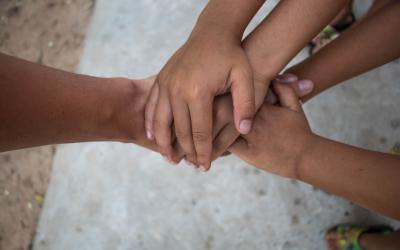
National Aboriginal and Torres Strait Islander Children’s Day is a day all Australians are urged to celebrate Aboriginal and Torres Strait Islander children and learn about the impact that culture, family and community plays in the life of every child.
The Guunu-maana (Heal) Aboriginal and Torres Strait Islander Health Program at The George Institute for Global Health drives meaningful, ethical research and advocacy to transform the health and wellbeing of Indigenous peoples and communities. Recipient of the 2025 NHMRC Research Quality Biennial Award, Guunu-maana is committed to research quality, being led by Aboriginal and Torres Strait Islander ways of knowing, being and doing to generate evidence that privileges Indigenous knowledges and research quality within the field.

Professor Emily Banks AM, recipient of the 2025 NHMRC Outstanding Contribution Award, is a public health physician and epidemiologist working towards improving health and healthcare, at an individual and population level. With interests spanning chronic disease, tobacco control, Aboriginal and Torres Strait Islander Health and healthy ageing, Professor Banks’s extensive research into population health is changing public behaviours, guiding healthcare professionals and having a significant impact in the community.
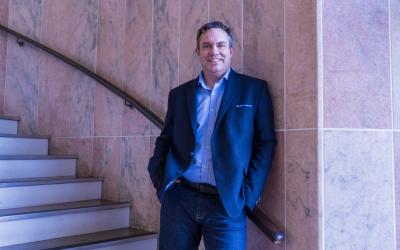
Ngiyampaa/Wongaibon social epidemiologist and recipient of the 2023 NHMRC David Cooper Clinical Trials and Cohort Studies Award, Professor Raymond Lovett has focused his career on improving Aboriginal and Torres Strait Islander health. As an Associate Director of Yardhura Walani (Australian National University) and Director of Mayi Kuwayu: The national study of Aboriginal and Torres Strait Islander wellbeing, Professor Lovett’s research has influenced policy at state and national levels, as well as empowered communities at the local level. He is now aiming to take this to the global stage through the development of a world-first Indigenous wellbeing index.
NHMRC is committed to improving the health of Aboriginal and Torres Strait Islander peoples through funding research of the highest quality, integrity and excellence. We also encourage applications across our grant funding program that address Aboriginal and Torres Strait Islander health.
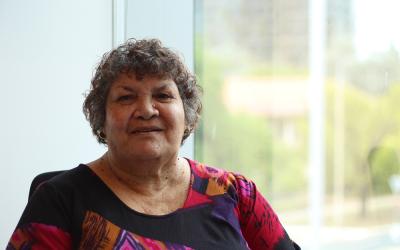
Professor Yvonne Cadet-James, the pioneering researcher, academic, mentor, registered nurse and midwife is celebrating a 25-year legacy of Aboriginal and Torres Strait Islander health research at the National Health and Medical Research Council (NHMRC).
Warning: Some people may find parts of this content confronting. If this material raises any distress, contact Lifeline on 13 11 14, Call 13YARN or Kids Helpline on 1800 55 1800.
A self-described grassroots Aboriginal researcher, Professor Maree Toombs is responsible for developing the first Indigenous-led and designed suicide intervention training program in Australia, creating space for connection to traditional lands and culture as part of life-saving support.
Professor Cath Chamberlain, a Palawa woman of the Trawlwoolway clan (Tasmania), received an NHMRC Early Career Fellowship in 2014 to find culturally safe ways to improve cardiometabolic health outcomes in Aboriginal and Torres Strait Islander mothers.

Professor Rhonda Marriott AM, a descendant of Nyikina people of the Kimberley, has devoted five decades to nursing and midwifery in clinical, academic and research roles.
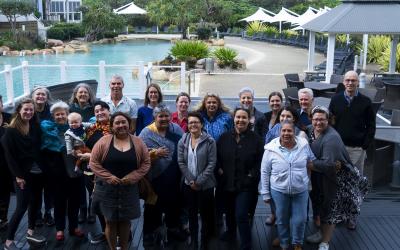
'It’s about coming with an open mind and heart, and willingness to deeply listen to community… to have any preconceptions challenged and re-learn ways of doing research' - Dr Veronica Matthews , co-lead investigator, STRengthening systems for InDigenous healthcare Equity (STRIDE)

Deciding to commit to a research life is brave – so is committing to do the hard research. Professor Cath Chamberlain says with Aboriginal and Torres Strait Islander health, in particular, 'we are going to need to take some more risks to do things differently'.

Now an ear, nose and throat surgeon, Associate Professor Kelvin Kong was destined for health care. Growing up Kelvin and his sisters were always keen to help his mother, a Registered Nurse, whenever she had a one of their mob come around to remove a suture, tend to a cut or get a vaccination.
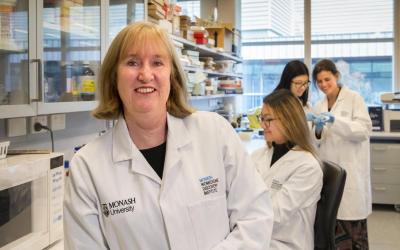
‘18 per cent of all Indigenous Australian adults have chronic kidney disease – two times as likely as non-Indigenous Australians.’