We're changing the way Sapphire looks
Same platform, new visual identity. Learn more: Sapphire is becoming NHMRC Grant Management System.
We're changing the way Sapphire looks
Same platform, new visual identity. Learn more: Sapphire is becoming NHMRC Grant Management System.
In 1940, Australia experienced an epidemic of rubella: a contagious, viral illness also known as German measles. The following year, an ophthalmologist working in Sydney observed that babies he was treating for an unusual type of congenital cataract had been born to mothers who had contracted rubella early on in their pregnancies.
NHMRC, noting the importance of this world-first discovery, acted quickly to investigate rubella’s potential to cause abnormal fetal development, and played an important role in bringing this to the attention of clinicians in Australia before a vaccine became available. Today, vaccination against rubella is part of the National Immunisation Program Schedule.
A landscape format version of this case study is available as a PDF from the Downloads section below.
Rubella is a viral disease that may manifest as a rash and a low grade fever. In 50% of cases the symptoms may be so mild as to be inapparent. During the 1700s, rubella was first described by German scientists who thought it was related to measles or scarlet fever. It was identified as a separate disease in 1814.
Immediately following a widespread epidemic of rubella in 1940, Dr Norman Gregg, senior ophthalmic surgeon at the Royal Alexandra Hospital for Children (RAHC) in Sydney, began seeing an increased number of cases of infants who had congenital cataracts of an unusual variety. These infants were frequently undersized and also had congenital heart and other impairments. In the majority of these cases the mother had been infected by rubella. Surveying his colleagues in other Australian states, he found a total of 78 such cases. He published these results in 1941 in an article titled ‘Congenital Cataract following German Measles in the Mother’ in Transactions of the Ophthalmological Society of Australia.
In the 1940s, the prevailing scientific understanding was that congenital malformations were inherited, and that viruses could not harm a developing fetus, so Gregg’s finding was questioned by some in the research community. NHMRC, however, took a proactive approach and appointed a committee chaired by Gregg to further investigate.
In 1943, NHMRC-funded virologist and Director of Australia’s Walter and Eliza Hall Institute (WEHI), Dr Frank Macfarlane Burnet, toured the United States and promoted Gregg’s discovery. From 1946-1950, Burnet chaired an NHMRC expert committee on rubella in pregnancy.
Women infected with rubella may develop temporary arthritis. However, if a pregnant woman is infected with rubella during her first trimester it can cause miscarriage and also have devastating effects on her growing baby. Congenital defects include cataracts, deafness, heart disease and microcephaly.
During several decades following Gregg’s discovery, NHMRC funded a number of researchers who pioneered investigations into the rubella virus and made significant contributions to knowledge.
Working at The Institute of Medical and Veterinary Science in Adelaide, Swan was already an NHMRC funded virologist when he started investigations into rubella during pregnancy and its associated congenital defects – now called congenital rubella syndrome (CRS). He was the first to document that rubella could cause deafness in children.
During the period 1947-56, NHMRC supported rubella research undertaken at WEHI, led by Burnet and primarily undertaken by Anderson, to induce immunity experimentally in human volunteers, and to grow the rubella virus in the laboratory.
Lancaster was a physician and medical statistician based at The University of Sydney who served on several NHMRC committees. NHMRC encouraged grantees to use his statistical services before publishing their research.
Burgess and her colleagues at RAHC, Drs Jill Forrest, David C. Dorman and John D. Harley, worked on virological and immunological aspects of CRS. Burgess trialled the rubella vaccine and later advised NHMRC on rubella vaccination schedules.
A virology laboratory was established at Fairfield Infectious Diseases Hospital, Melbourne, in 1950 to undertake clinical, diagnostic and research services. Hayes – a laboratory-based virologist working on congenital rubella – and her colleagues at Fairfield (including Noreen Lehmann), were leaders in virology during the 1970s and 1980s.
In 1943, Swan suggested to NHMRC that the public be informed of the danger of contracting rubella during pregnancy. NHMRC communicated this information to state health departments and the Ophthalmological Society of Australia.
In 1962, during a worldwide outbreak, the rubella virus was isolated by researchers in the United States and an antibody test and vaccine developed. In the late 1960s, NHMRC recommended mass immunisation campaigns for girls between 12-14 and that a guide to the administration of rubella virus vaccines be circulated to all medical practitioners. NHMRC further recommended that a trial take place following introduction of the vaccine to assess the campaign’s effectiveness. The national schoolgirl rubella vaccination program commenced in 1971.
In 1980, NHMRC recommended that an additional campaign using the combined measles, mumps, rubella (MMR) vaccine during childhood would achieve early rubella immunity and ultimately reduce the incidence of the disease and CRS. In 1982, an NHMRC Working Party was set up to examine the MMR vaccination program.
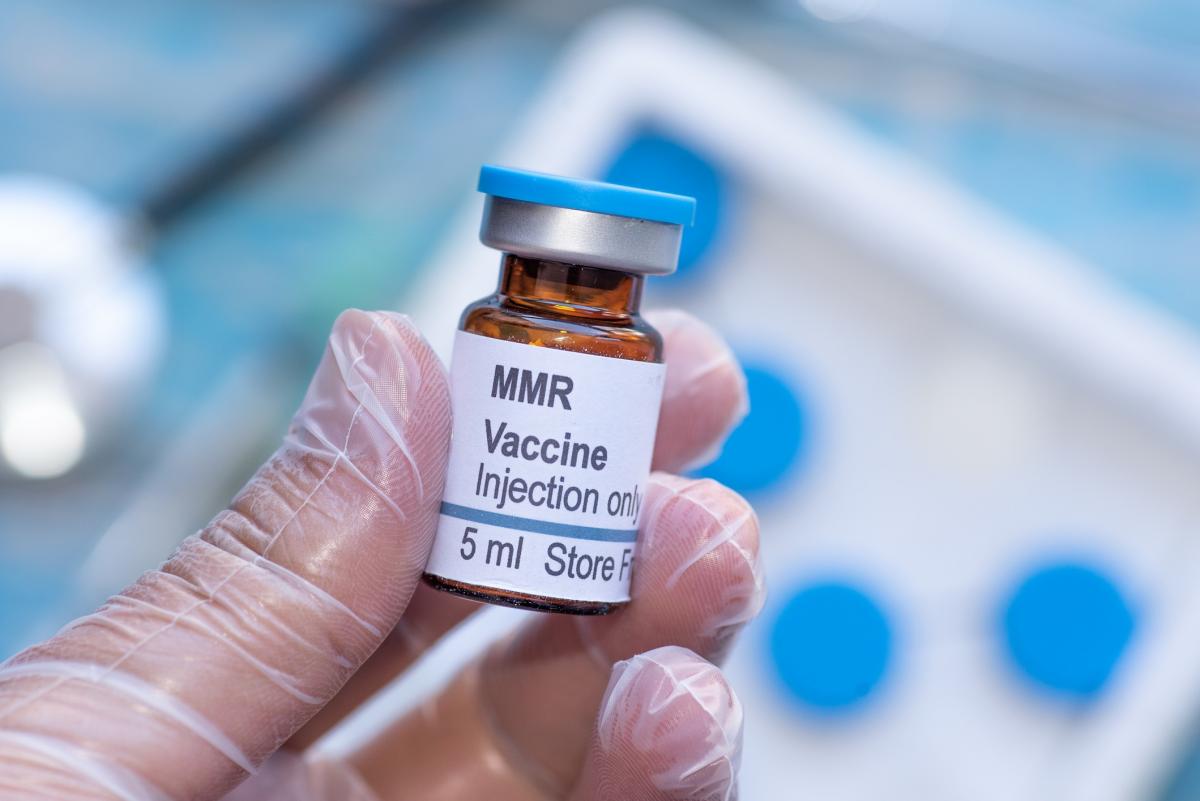
NHMRC acted quickly to investigate rubella’s potential to cause birth defects and played an important role in bringing CRS to the attention of clinicians in Australia.
After the commencement of rubella immunisation, hospital and population studies in the 1980s and 1990s demonstrated high antenatal sero-positive rates of 95%-96%. The National Acoustic Laboratories estimated a fall in the incidence of congenital deafness attributed to rubella from well over 0.51 to 0.05 per 1000 live births between 1964-70 and 1977-82. Rubella and CRS became notifiable diseases in all Australian jurisdictions in 1991.
Mass infant MMR vaccination produced a 99% reduction in both rubella and CRS incidence by 2010 compared to the pre-vaccination era (1960–70). Statistics from a 2019 report show that there is now (on average) less than one incident case of CRS in Australia each year.1
In 2018, the World Health Organisation officially declared that Australia had eliminated rubella, but cases of rubella can still occur. Unvaccinated pregnant women may be exposed to rubella, especially when travelling overseas as some countries still have not implemented rubella vaccination programs.
The processes through which rubella leads to CRS are complex and incompletely understood. Recent discoveries of similar viruses in animals may facilitate comparative studies and animal models of rubella and CRS.
| Date | Event |
|---|---|
| 1939 | Grant (Swan) |
| 1940 | Grant (Swan) |
| 1940 | Rubella epidemic in Australia |
| 1941 | Gregg’s discovery |
| 1941 | Grant (Swan) |
| 1943 | Grant (Swan) |
| 1944 | Grant (Swan) |
| 1944 | NHMRC committee established |
| 1945 | Grant (Swan) |
| 1946 | Grant (Swan) |
| 1946 | NHMRC committee established |
| 1947 | WEHI grants (Anderson) |
| 1948 | WEHI grants (Anderson) |
| 1949 | WEHI grants (Anderson) |
| 1950 | WEHI grants (Anderson) |
| 1952 | WEHI grants (Anderson) |
| 1954 | WEHI grants (Anderson) |
| 1954 | Grant (Swan) |
| 1962 | Worldwide outbreak of rubella – virus isolated |
| 1967 | Grant (Dorman & Harley) |
| 1969 | NHMRC recommends rubella vaccine |
| 1969 | Grant (Hayes) |
| 1970 | Grant (Burgess & Dorman) |
| 1971 | Rubella vaccine for girls and at-risk women |
| 1973 | Grant (Hayes) |
| 1976 | Vaccine trials |
| 1976 | Grant (Burgess & Forrest) |
| 1977 | Grant (Hayes) |
| 1978 | Grant (Burgess) |
| 1982 | NHMRC MMR Working Party established |
| 1987 | Grant (Burgess) |
| 1989 | MMR added to immunisation schedule |
Sir Norman McAlister Gregg (1892-1966) graduated from medicine in 1915 then served with the Royal Army Medical Corps in France. He received postgraduate training in London and Birmingham, UK, before working at RAHC. In 1953, he was made a Knight Bachelor for services to medical science.
Dr Charles Spencer Swan (1912-1963) worked at the Institute of Medical and Veterinary Science in Adelaide. His research in the 1940s confirmed Gregg’s findings about the effect of maternal rubella on the unborn child.
Professor Henry Oliver Lancaster (1913-2001) was an expert medical statistician who served on several NHMRC committees. Among his many contributions to medical science was his finding (reported in 1956) that melanoma was associated with latitude (i.e. intensity of sunlight). Oliver was made an Officer of the Order of Australia (AO) in 1992 for services to science.
Dr Jill Forrest conducted research into the effects of rubella infection on fetal development. She was Research Fellow at the Children’s Medical Research Foundation, RAHC (1973-1977).
Dr Stewart Gray Anderson (1918-2014) became a medical practitioner, then worked at WEHI from 1945 to 1960. He moved to England in 1961 to work for the National Institute for Medical Research.
Noreen Lehmann (1932-2020) was responsible for isolating a wide range of respiratory and enteric viruses as well as the viruses responsible for many of the infectious rashes of childhood. Her assays became widely used for screening pregnant women and created a new market for industry.
Professor Margaret Burgess (nee Menser) worked at the Children’s Medical Research Foundation at the RAHC from 1965-1984 as a Research Fellow (1965–1970) and as a Norman Gregg Senior Research Fellow (1970–1984). In the 1990s she conducted large community-based studies on hepatitis B vaccination.
Professor Burgess was the Director of the National Centre for Immunisation Research and Surveillance of Vaccine Preventable Diseases from 1997-2004. She was awarded the Queen Elizabeth II Silver Jubilee Medal for services to the community in 1997, the Order of Australia in 2003, and the RACP Howard Williams Medal in 2006.
Dr Kathleen Hayes commenced studying congenital rubella at the Great Ormond Street Hospital for Children, London (1964-67).
Hayes conducted prospective and other studies to clarify the complex nature of maternal, prenatal and early postnatal cytomegalovirus (CMV) infection while based at Royal Children’s Hospital, Melbourne and Monash University Dept. of Paediatrics, Queen Victoria Hospital, (1968-78). Thereafter she headed the Rubella-CMV Section of Virology at Fairfield Hospital to 1996.
In 1983, a measles-mumps (MM) vaccination program was funded in Australia for infants from 12 months onward (9 months for Indigenous babies in the Northern Territory). Protection against rubella was added through the combined MMR in 1989. A second dose of MMR vaccine was recommended and funded for both males and females in 1992. In 1994, an MMR program was commenced for both teenage boys and girls. In 1998, the second dose of MMR vaccine was changed from teenage to 4 years of age. MMR catch-up vaccination programs for adults have been instigated by various State governments since 2000.
This case study was developed with input from Dr Kathleen Hayes, Professor Margaret Burgess and Professor Ian Gust.
The information and images from which impact case studies are produced may be obtained from a number of sources including our case study partner/s, NHMRC’s internal records and publicly available materials.
The following reference sources were used for this case study:
Bennett AJ, Paskey AC, Ebinger A, Pfaff F, Priemer G, Hoper D, et al. Relatives of rubella virus in diverse mammals. Nature. 2020; 586, 424–428. DOI: 10.1038/s41586-020-2812-9.
Rubella. Britannica. Obtained from https: //www.britannica.com/science/rubella on 26 Oct 2020.
Rubella (German measles), Department of Health website. Obtained from https: //www.health.gov.au/health-topics/ on 28 Oct 2020.
Vaccine-preventable diseases. Fact Sheet: Rubella in Australia. Australian Institute of Health and Welfare. 2018, Nov. Obtained from: https: //www.aihw.gov.au/reports/immunisation/vaccine-preventable-diseases/ on 1 Dec 2020.
Anderson SG. Epidemiological aspects of rubella. The Medical Journal of Australia. 1950 Sep; 2(11): 389-90.
Dunn PM. Perinatal lessons from the past: Sir Norman Gregg, ChM, MC, of Sydney (1892–1966) and rubella embryopathy. Arch Dis Child Fetal Neonatal Ed. 2007 Nov; 92(6): 513–514. DOI: 10.1136/adc.2005.091405.
Gumpel SM, Hayes K, Dudgeon JA. Congenital perceptive deafness: Role of intrauterine rubella. British Medical Journal. 1971; 2: 300-4. DOI: 10.1136/bmj.2.5757.300.
Hertzberg R. Congenital cataract following German measles in the mother. Abstracts from the publications of the late Sir Norman McAlister Gregg. Australian and New Zealand Journal of Ophthalmology. 1985 Aug; 13(3): 303-309. DOI 10.1111/j.1442-9071.1985.tb00439.x.
Reagan, LJ. ‘Observing Bodies’ in Dangerous Pregnancies: Mothers, Disabilities, and Abortion in Modern America. 1st ed., University of California Press, 2010. p 22-54.
Forrest JM, Menser MA. Congenital rubella in schoolchildren and adolescents. Archives of Disease in Childhood. 1970 Feb; 45(239): 63-9. DOI 10.1136/adc.45.239.63.
Gao Z, Wood JG, Burgess MA, Menzies RI, McIntyre PB, MacIntyre CR. Models of strategies for control of rubella and congenital rubella syndrome—A 40 year experience from Australia. Vaccine. 2013 Jan; 31(4): 691-7.
Honeyman MC, Forrest JM, and Dorman DC. Cell-mediated Immune response Following natural rubella and rubella vaccination. Clin. exp. Immunol. (1974) 17, 665-671.
Significant events in measles, mumps and rubella vaccination practice in Australia. National Centre for Immunisation Research and Surveillance. 2019 Dec. Obtained from https: //www.ncirs.org.au/health-professionals/history-immunisation-australia on 22 Oct 2020.
National Immunisation Strategy for Australia 2019–2024. Australian Department of Health. 2018; p. 20. Obtained from https: //www.health.gov.au/resources/publications/ on 30 Apr 2021.
Ward K, Quinn H, Menzies R, McIntyre P. A history of Adolescent school-based vaccination in Australia. Communicable Diseases Intelligence. 2013 Jun; 37(2): 156-167.
1 Australian Institute of Health and Welfare. The burden of vaccine preventable diseases in Australia. Canberra: AIHW; 2019. p.105.