Leading a groundbreaking research project, Professor Hugh McDermott has enhanced the precision of deep brain stimulation for Parkinson's disease, positioning his team at the forefront of the field and revolutionising treatment for patients worldwide.
From an early age, Professor Hugh McDermott was interested in electronics and audiology. Combining this with a familial interest in music, Professor McDermott sought to apply his background in electronic engineering to help people with hearing loss, partly so they could appreciate music, but mostly because it ticked several boxes that were personally important to him.

Professor McDermott was driven to commence a PhD working on an advanced cochlear implant, which later transitioned into deep brain stimulation (DBS). Bringing the learnings from his early career into the field of DBS made sense to him because while DBS is a relatively new technology, cochlear implants and DBS share the same underlying technical principles.
Both technologies work by delivering small pulses of electricity to neurons to alleviate certain health conditions. One of the main conditions that DBS has been proven to be beneficial for is Parkinson's disease.
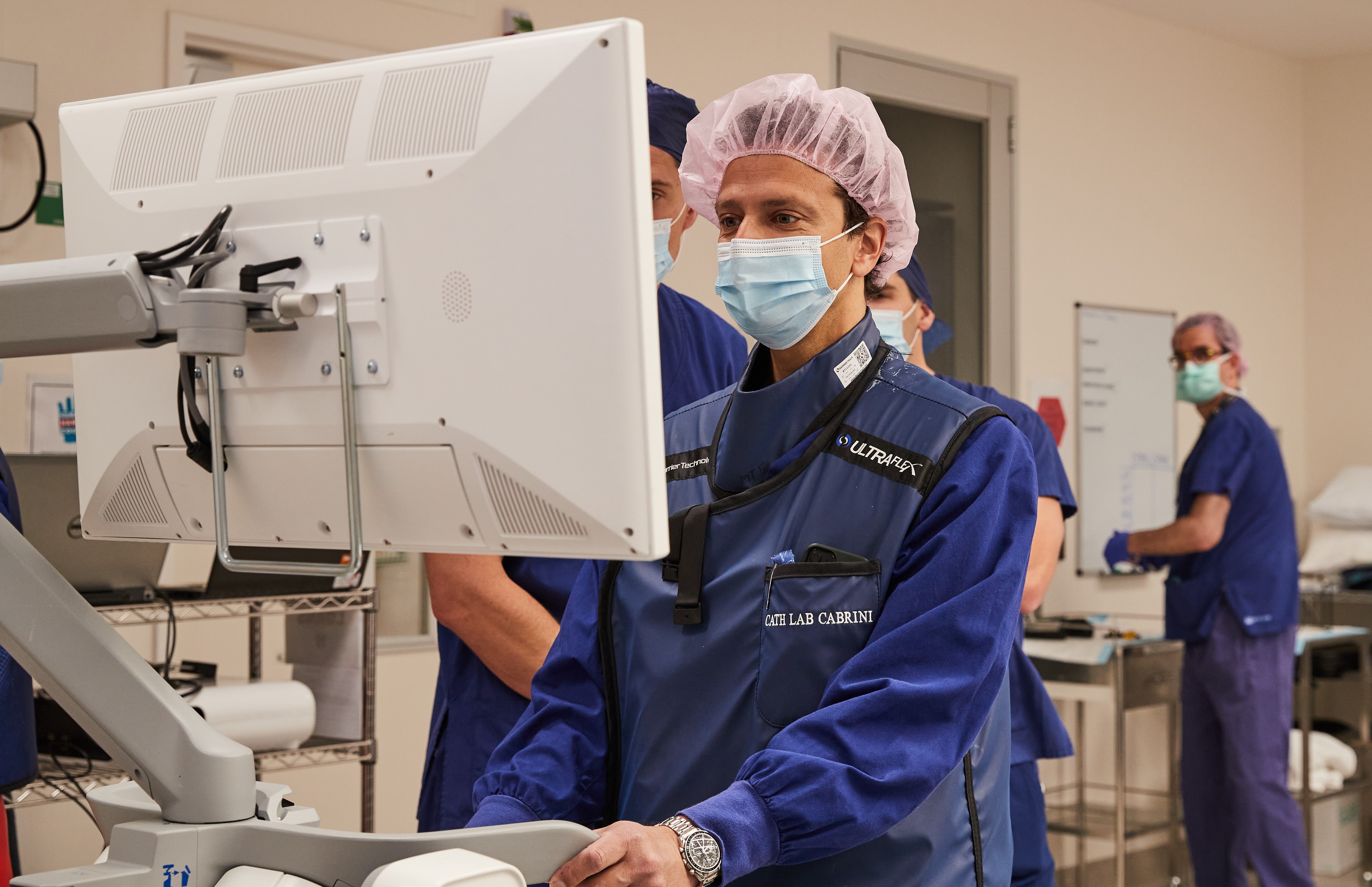
Parkinson’s disease affects 150,000 Australians[1]. It is characterised by slowness of movement, muscle stiffness and tremors that can impact quality of life. There is currently no cure, but symptoms can be alleviated with medications. Unfortunately, however, medications can be insufficient for some people. In these cases, DBS can provide great benefits by delivering controlled electric currents to the brain instead of, or alongside, medications.
Professor McDermott led a multidisciplinary team of researchers, neurologists, engineers, and neurosurgeons to develop a technique that assists surgeons in placing DBS electrodes more precisely and consistently in the brain of each patient. Similar to how a weather radar displays rain patterns in a map, Professor McDermott’s system sends out electrical pulses during the time that the surgeon is passing the electrode into the brain. Certain neurons in the brain then respond by sending a signal back to the device which displays it on a screen for the clinician to interpret.
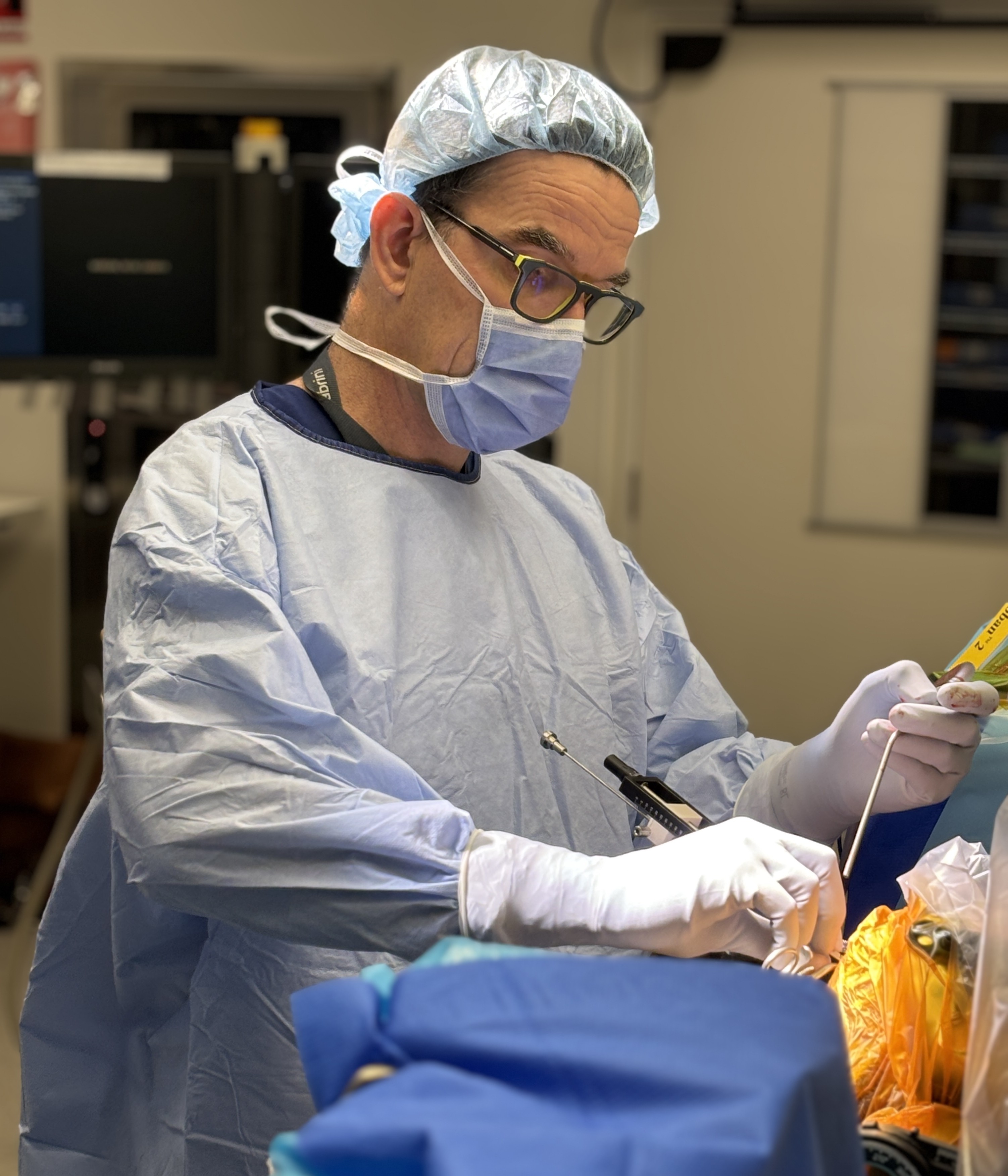
A key finding of this research was just how reliable and consistent the signal is when the electrode is positioned at the ideal location. Professor McDermott says this is the most critical finding for clinicians as they are assured that DBS will then benefit the patient and the surgery will not need to be revised.
‘That is quite unusual in medicine to have such a degree of certainty. It might have been the case that we just struck it lucky with the first few patients, but we've gone on to show that this is a reliable, consistent signal when the electrode is positioned correctly – this was a huge confidence booster to the team,’ – Professor McDermott.
This work has been replicated in several different hospitals both in Australia and the United Kingdom and has sparked global interest from other researchers seeking to understand more about what they mean for patients both with Parkinson’s disease and other conditions.
Next steps
With additional funding from investors and grants, Professor McDermott’s research led to the founding of a company in Melbourne. The innovative techniques developed have been patented and licensed to a global DBS provider. Through commercialisation the benefits of this work will reach patients and clinicians worldwide, enabling surgeons to optimise electrode placement in the brain and ensure each patient gains the greatest possible benefits from DBS.
Chief investigator: Professor Hugh McDermott
Administering institution: The Bionics Institute of Australia | The University of Melbourne
Team members:
- Associate Professor Wes Thevathasan
- Dr Kristian Bulluss
- Dr San San Xu
- George Bartholomew
- Angus Begg
- Dr Kiaran Lawson
- Dr Wee-Lih Lee
- Dr Jonathon Miegel
- Dr Paul Minty
- Ash Moorhead
- Dr Thushara Perera
- Dr Matt Petoe
- Dr Nick Sinclair
Grant: Development Grant
Year: 2020–2023
Funding amount: $784,786
[1] Parkinson’s Australia. Statistics. Available from: Statistics - Parkinson's Australia