Developed by Associate Professor Jess Howell, a point of care test that uses a single droplet of blood to measure liver damage has the potential to revolutionise the diagnosis and treatment of hepatitis B for populations worldwide.
A defining moment in Associate Professor Jess Howell’s career was the day she woke up and realised she was a formal researcher as opposed to something she did on the side of her regular job as a clinical hepatologist. To be able to say that she was a researcher was a turning point for her.
This story is part of our 10 of the Best – Seventeenth edition. 10 of the Best is an annual NHMRC publication, showcasing 10 NHMRC-funded health and medical research projects. See more 10 of the Best.
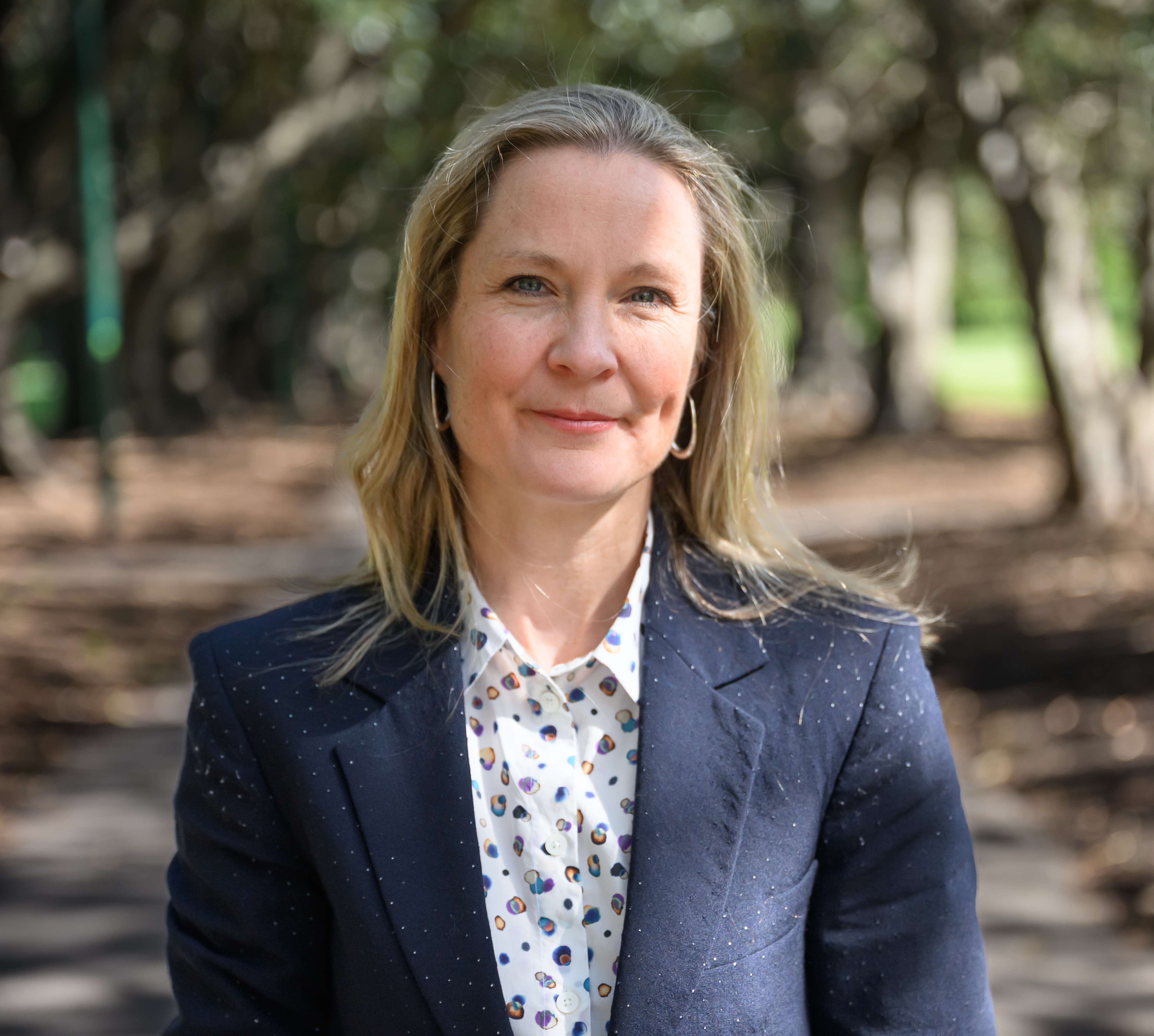
With a natural affinity for scientific discovery and working with marginalised and culturally and linguistically diverse populations, Associate Professor Howell was driven to explore how outcomes for patients with liver disease could be improved. Over time, her research has evolved to investigate viral hepatitis, particularly hepatitis B, and liver cancer which is an unfortunate downstream complication of untreated viral hepatitis.
Hepatitis B is a common chronic infection affecting an estimated 254 million people1 and disproportionately favouring marginalised populations. While there are effective treatments to prevent complications from hepatitis B, there is no cure. Even more alarmingly, globally only 13% of people are estimated to be diagnosed and only 3% are on treatment.2
Associate Professor Howell’s Rapid B study sought to address the gap in hepatitis B testing and provide safe and effective medical care, access and treatment, especially in rural and remote communities where pathology services are not accessible.
Working with a multidisciplinary team that crossed international borders, Associate Professor Howell developed and validated 2 point of care tests for liver inflammation and liver scarring that simply require a droplet of blood.
‘The benefits of this type of hepatitis B testing are that it can expand across all locations, and it does not cost a lot of money. It can also tell us on the spot how advanced and significant a person’s liver disease is and whether they are eligible for treatment,’ said Associate Professor Howell.
Following the establishment of commercial partnerships, the rapid B test has since expanded into a self-testing device, as well as another form of point of care testing to help diagnose liver toxicity among patients on clinical drug trials.
The uniqueness of Associate Professor Howell’s mathematical modelling has established the optimal strategies to prevent, diagnose, and treat people with hepatitis B which has the potential to achieve the World Health Organizations’ 2030 elimination targets. Associate Professor Howell hopes that with this expansion, it will continue to go above and beyond hepatitis B testing into improved access to timely diagnosis and treatment for liver disease.
‘Reflecting on how far we’ve come, I often think back to when I was working in the clinic and seeing individual patients in front of me who were suffering from a late diagnosis of hepatitis B and the complications of liver cancer. This always brings it home why I'm doing the research that I'm doing and drives the importance of continuing research in this field,’ said Associate Professor Howell.
Next steps
Associate Professor Howell and her team will commence further field trials in sub-Saharan Africa and the Pacific Islands. Using their established mathematical models, this continuing research will determine the cost effectiveness and impact of using a point of care test for hepatitis B in low resource settings globally. These novel diagnostic tests of liver inflammation will continue to expand access to rapid liver disease assessment across Australia, with the ultimate goal of reducing deaths from hepatitis B related liver failure and primary liver cancer.
Grant information
Chief investigator: Associate Professor Jessica Howell
Institution: Burnet Institute
Team members:
- Dr Romesh Abeysuriya
- Associate Professor David Anderson
- Dr Purnima Bhat
- Dr Minh Pham
- Ms Caroline van Gemert
- Professor Joseph Doyle
- Associate Professor Rohit Sawhney
- Professor Alexander Thompson
- Professor Margaret Hellard
- Professor Kumar Visvanathan
- Associate Professor John Lubel
- Dr Huy Van
- Professor Nick Scott
- Associate Professor Avik Majumdar
- Professor Geoffrey McCaughan
Grant: Ideas Grant
Year: 2020–2022
Funding amount: $389,113
1 World Health Organization. Hepatitis B. Available at: Hepatitis B
2 WHO Guidelines for the prevention, diagnosis, care 2024. https://www.who.int/publications/i/item/9789240090903